


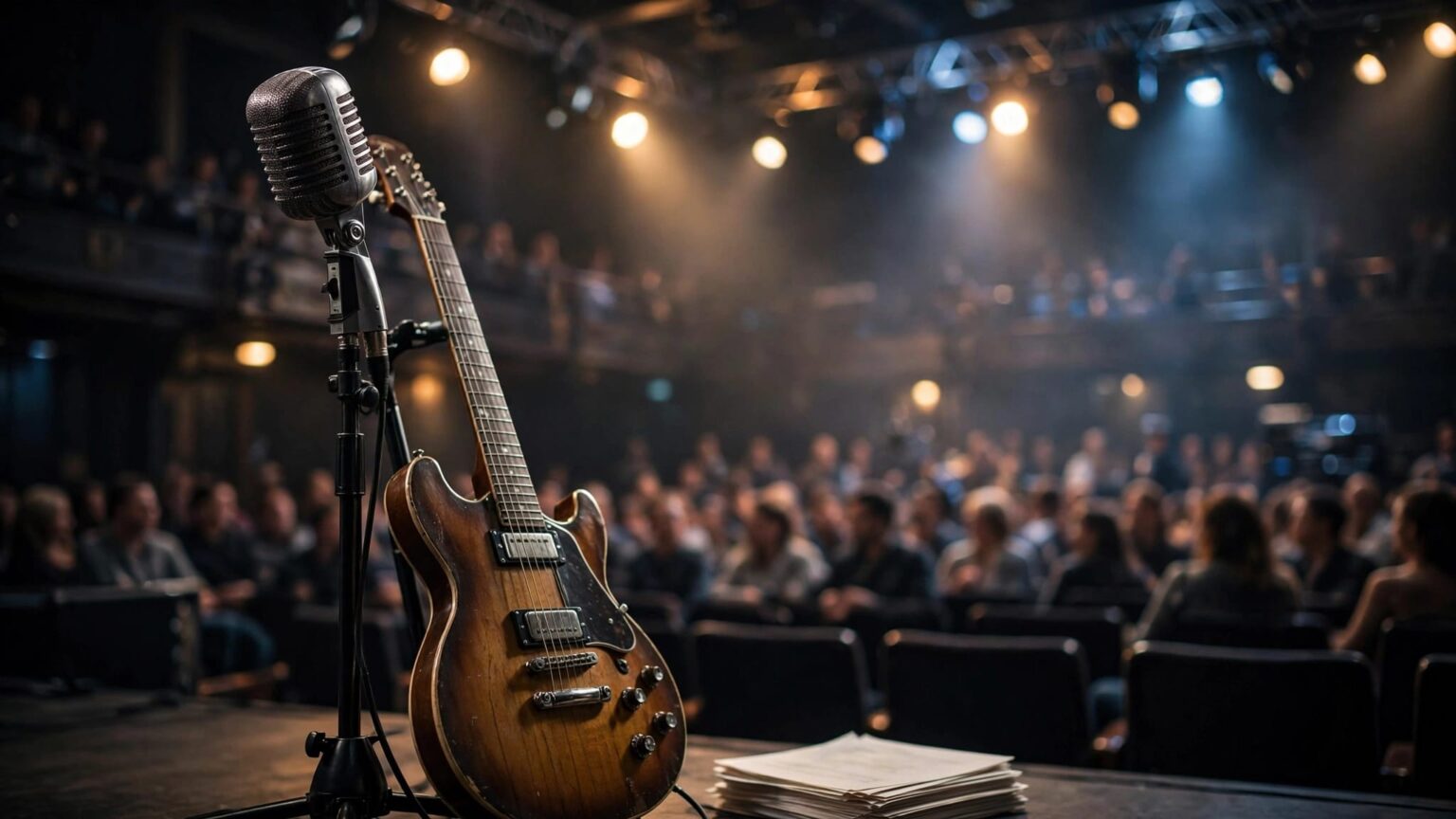
Music Venue Copyright Liability Under 17 U.S.C. § 501
Yes. A music venue can be liable under 17 U.S.C. § 501 for unauthorized public performances of copyrighted songs. Hiring an independent band or letting a promoter run the show doesn’t automatically protect the venue or its owners.
Music venue copyright liability depends on authorization, control, and financial benefit, along with the applicable liability theory. At ChaseLawyers®, we help businesses address the licensing and contractual issues behind these disputes.
The starting point is the right being exercised and who bears responsibility for its use.
Table of Contents
ToggleKey Takeaways
- Venues can face direct, contributory, or vicarious copyright liability, depending on the facts.
- A performer agreement doesn’t prevent a copyright owner from pursuing an otherwise liable venue.
- ASCAP, BMI, SESAC, and GMR administer different repertories; one license doesn’t clear every song.
- Available remedies can include damages, injunctions, and discretionary attorney’s fees, subject to statutory requirements.
How Music Venue Copyright Liability Works
17 U.S.C. § 501 establishes infringement liability for violating a copyright owner’s exclusive rights. For live music, § 106(4) generally supplies the relevant right: public performance of the musical composition.
Direct infringement concerns the unauthorized performance
A claimant generally must establish ownership of the relevant copyright and an unauthorized exercise of a protected right. Direct infringement ordinarily doesn’t require proof that the defendant knew the conduct violated copyright.
A live cover can implicate the songwriter’s composition copyright even when the band makes no recording. Playing recorded music over venue speakers can also implicate composition performance rights.
The song and its recording are separate assets. Understanding the two copyrights in recorded music helps prevent licensing one right while overlooking another.
Vicarious liability focuses on supervision and benefit
Vicarious liability generally requires the right and ability to supervise infringing activity plus a direct financial interest in it. Courts examine actual authority and the connection between the music and the business.
An owner’s power to control entertainment, together with revenue tied to that entertainment, can matter. Actual knowledge isn’t generally required under this theory.
Contributory liability adds a knowledge requirement
Contributory infringement generally involves knowledge of infringement and inducing, causing, or materially contributing to it. Continuing to facilitate unauthorized performances after receiving specific infringement notices can create significant exposure.
These theories require separate analysis. Neither ownership of the building nor the appearance of a band automatically resolves liability.
What Federal Court Decisions Show
Venue disputes illustrate why delegating entertainment responsibilities doesn’t necessarily eliminate copyright exposure. Courts examine the relationship between the defendant and the infringing performances, rather than relying only on contractual job titles.
Meadowlake: supervisory authority can reach an owner
In Broadcast Music, Inc. v. Meadowlake Ltd., No. 13-3933 (6th Cir. June 6, 2014), the Sixth Circuit affirmed a restaurant owner’s vicarious liability.
The dispute concerned Rafters Bar and Grill in Canton, Ohio, where live music and recordings were performed without authorization. BMI had sent more than 20 warning letters and licensing offers.
The court focused on supervisory authority and an obvious, direct financial interest. The decision illustrates how an owner can face liability even without personally choosing each song.
Although the warning history was substantial, knowledge wasn’t a required element of the vicarious-liability theory applied there.
Gershwin: knowing participation creates separate exposure
In Gershwin Publishing Corp. v. Columbia Artists Management, Inc., 443 F.2d 1159 (2d Cir. 1971), the Second Circuit articulated the familiar contributory-infringement standard.
A person who knows about infringing activity and induces, causes, or materially contributes to it can bear responsibility. For promoters and venue operators, the lesson concerns conduct: assistance with an event can matter when paired with knowledge of unauthorized performances.
These decisions address different theories and jurisdictions. A claim involving a Florida or New York venue still requires analysis under the governing circuit’s law and the particular evidence.
Which Licenses Cover the Music?
Permission must match the composition, the relevant ownership interests, and the intended use. A business arrangement that authorizes one category of music use doesn’t automatically authorize another.
Blanket licenses have repertory limits
ASCAP, BMI, SESAC, and Global Music Rights administer public-performance rights under their respective arrangements. Their blanket licenses generally allow covered uses of works within their repertories, subject to license terms.
A venue may need licenses involving multiple organizations or direct permissions from appropriate rightsholders. A songwriter’s PRO membership doesn’t itself license the venue where that songwriter performs.
Ownership shares also matter. Jointly written songs can involve different publishers, administrators, and PRO affiliations. A repertory listing helps identify interests, but it doesn’t replace analysis of the rights actually granted.
There is no single universal venue licensing fee. Applicable charges depend on the licensing arrangement and relevant business or usage factors.
Recording and livestreaming require additional analysis
A live-performance license doesn’t automatically authorize filming a concert, posting promotional clips, or offering an on-demand archive.
Those activities can implicate reproduction, synchronization, and other rights. Using an existing recording can also require permission involving the master recording.
Our guidance on cover song licensing requirements explains why performing a cover, releasing an audio recording, and posting a performance video involve different permissions.
Similarly, SoundExchange administers a separate statutory royalty stream for qualifying noninteractive digital sound-recording performances. It doesn’t replace a venue’s composition public-performance authorization.
Damages Can Extend Beyond Unpaid License Fees
An infringement claim can cost substantially more than the license the venue didn’t obtain. Under § 504, a claimant may pursue actual damages plus attributable profits not already counted in those damages, or elect statutory damages when eligible.
The Copyright Office’s copyright infringement and remedies provisions establish these statutory ranges.
| Statutory damages category | Amount per work |
|---|---|
| Ordinary range | $750 to $30,000 |
| Willful infringement | Up to $150,000 |
| Proven innocent infringement | Potential reduction to $200 |
These are per-work rules, not automatic charges for each song play, attendee, or event. Section 504 generally provides one statutory award for infringements of a particular work for which an infringer is liable.
Willfulness requires a factual determination. Ignored warnings can support a claimant’s argument, but a demand letter doesn’t automatically establish the maximum award.
Likewise, innocent infringement requires proof of lack of awareness and no reason to believe the conduct infringed. Simply misunderstanding licensing obligations doesn’t guarantee a reduction.
Courts may also issue injunctions under § 502. Under § 505, they may award costs and reasonable attorney’s fees to a prevailing party; fees aren’t automatic.
Finally, § 412 can restrict statutory damages and fees because of registration timing. Our explanation of copyright registration timing and remedies addresses that distinction. A limitation on those remedies doesn’t necessarily defeat the underlying infringement claim.
Contracts Allocate Risk Without Granting Missing Rights
A band contract stating that the artist handles licensing doesn’t bind a copyright owner who never agreed to that allocation. The venue may still face liability under the applicable legal theory.
However, a clear agreement can establish responsibility between the contracting parties. Useful provisions address the following:
- Assign responsibility for obtaining identified licenses and supplying documentation before the event.
- Define the permitted music uses, including live performance, background playback, recording, and promotional video.
- Allocate defense obligations and indemnity for breaches, with limits that match each party’s responsibilities.
Our guidance on venue performance contracts addresses the relationship between performers and operators.
Avoid treating indemnity as a substitute for permission. A reimbursement claim against a performer doesn’t prevent an injunction or remove the venue from an infringement lawsuit.
Also, liability insurance doesn’t automatically cover copyright claims. Coverage depends on the policy’s actual terms and exclusions.
A workable event agreement should address the planned production, rather than relying on a broad promise that someone else will handle “all music rights.”
Responding to a Licensing Notice or Infringement Claim
A licensing solicitation, a demand letter, and a filed complaint have different legal consequences. None should disappear into an unattended booking inbox.
Preserve the notice, existing licenses, setlists, event advertisements, promoter agreements, and correspondence about the disputed performances. These records can establish what occurred, which permissions existed, and who controlled the event.
Counsel can assess the claimant’s rights, the alleged works and dates, applicable defenses, and available remedies. Avoid assuming that purchasing a prospective license resolves earlier performances unless the agreement addresses that exposure.
At ChaseLawyers®, we help venues, promoters, and performers address these issues through our music rights licensing services. We can assess licensing gaps, contractual responsibilities, and infringement allegations so the response addresses the actual claim.
Frequently Asked Questions
Does a free show avoid copyright liability?
No. A performance can require authorization even when the venue charges no admission. Food and beverage sales or other commercial benefits can matter.
Section 110 contains limited exceptions, but free admission alone doesn’t satisfy them. Commercial venues shouldn’t assume that a charity theme or unpaid performer creates an exemption.
Does an independent promoter take all responsibility?
No. A promoter’s agreement can allocate responsibilities between the parties, but it doesn’t automatically eliminate the venue’s liability.
Courts still examine authorization, knowledge, supervisory authority, and financial interest under the relevant theory. A venue’s actual involvement can matter more than the contract’s label.
Can a venue present original songs without PRO licenses?
Potentially, if valid authorization covers all relevant composition interests and intended uses. A performer who wrote a song may have assigned rights or shared ownership with collaborators.
“Original music” describes authorship, not necessarily present licensing authority. Covers, recorded intermission music, and promotional videos also require separate consideration.
Protect the Performance Before the Dispute
A venue can face copyright liability even when someone else performs the songs. Documented permission and clearly assigned responsibilities provide stronger protection than informal assurances.
The practical goal is to align the music, the licenses, and the event agreements before the performance occurs. If a dispute has already started, ChaseLawyers® can help assess the rights involved and develop an appropriate legal response.


- 21 SE 1st Ave, Suite 700, Miami, FL 33131
- 305-373-7665
- 305-373-7668
- info@chaselawyers.com
- 1345 Avenue of the Americas, 2nd Floor, New York, NY 10105
- 212-601-2762
- info@chaselawyers.com
Get a response within 24 hours. We’ll clearly explain how we can support and protect your brand while staying within your budget.