


P-3 Visa Guide for Culturally Unique Artists
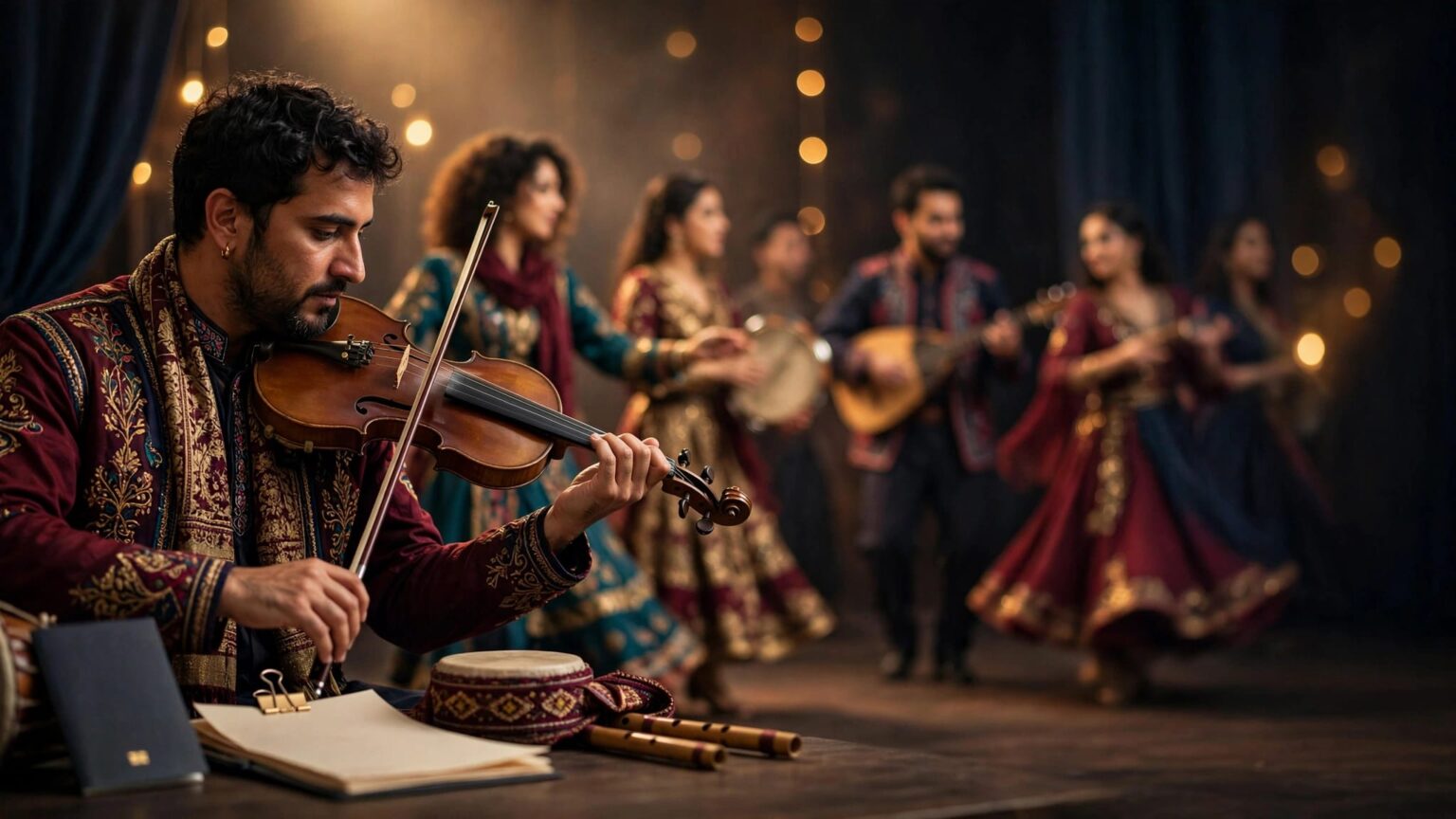
The P-3 visa is a temporary classification for artists or entertainers coming to the United States. They may perform, teach, coach, develop, interpret, or represent a culturally unique art form.
The category can fit a touring folk ensemble, a traditional dance teacher, a regional theater company, or a musician preserving a recognized cultural practice. However, a strong P-3 visa petition must connect the artist, the culturally unique program, and every scheduled U.S. engagement with credible evidence.
As a nonimmigrant worker, the beneficiary is authorized only for the temporary work described in the petition. Cultural identity alone doesn’t guarantee approval.
The legal foundation includes INA § 101(a)(15)(P)(iii), 8 C.F.R. § 214.2(p), and the USCIS P-3 guidance.
This guide provides general information, not legal advice. Verify filing procedures, fees, and processing options against current USCIS and Department of State sources.
Table of Contents
ToggleKey Takeaways
- The P-3 visa is for artists and entertainers who will temporarily perform, teach, coach, develop, interpret, or represent a culturally unique art form in the United States.
- Cultural identity or nationality alone is not enough; the petition should document the tradition, the artist’s role, and how every proposed engagement supports the culturally unique program.
- A U.S. employer, sponsoring organization, or agent must file Form I-129, supported by an agreement or deal memo, a detailed itinerary, consultation, and credible cultural evidence.
- Essential support personnel generally need a separate P-3S petition and must show that their specialized services are essential and integral to the principal artist’s program.
- P-3 status is temporary and generally covers only the approved work for up to one year at a time; approval does not guarantee visa issuance, admission, or permanent residence.
P-3 Visa Eligibility for Artists and Entertainers
A P-3 visa is available to foreign artists or entertainers who will temporarily perform, teach, coach, develop, interpret, or represent a culturally unique art form in the United States. The program may be commercial or noncommercial.
The governing rule appears in 8 C.F.R. section 214.2. It requires participation in cultural events that further understanding or development of the tradition. Cultural uniqueness can relate to a country, ethnicity, religion, tribe, region, or other established community tradition.
The artist’s role must fit the program
USCIS looks at the beneficiary’s actual work. A performer should have a defined role in presenting a culturally unique tradition. A teacher or coach should show that instruction relates directly to that practice.
For example, a classical Indian vocalist teaching raga techniques through a university residency may qualify. A curator leading workshops on Indigenous textile practices may qualify if the events present that traditional art as a distinct cultural practice. A generic concert, dance class, or commercial appearance usually needs more proof.
A P-3 petition can cover an individual artist or a group. The U.S. employer, a U.S. agent, or a sponsoring organization files the petition. The artist cannot self-petition.
Cultural identity is more than nationality
Nationality, a passport, or residence in a particular country doesn’t independently establish eligibility. The filing must identify the tradition, the beneficiary’s training or role, and how the planned events present that culturally unique tradition.
The central question is practical: would the submitted record let a reader understand the cultural character of the performances without relying on assumptions about the artist’s passport?
What USCIS Means by a Culturally Unique Program
A culturally unique program may involve traditional or unique ethnic, folk, cultural, musical, theatrical, or artistic performances and presentations. USCIS looks for a clear cultural identity tied to an art form, but the practice needn’t be ancient. Traditional art can qualify when the record establishes that identity.
The agency’s P-3 classification guidance and 8 C.F.R. § 214.2(p) confirm that artists may come to perform, teach, or coach individually or as part of a group.
Each listed engagement matters
A petition should identify every concert, workshop, residency, lecture, festival appearance, rehearsal, and educational presentation. More importantly, it should show how each engagement relates to the same art form and satisfies the culturally unique standard.
A calendar that combines traditional performances with unrelated nightclub dates creates a problem. The record must show that all performances or presentations in the petition satisfy that standard.
A cultural explanation cannot rescue a calendar that includes unrelated work. The program and schedule must tell the same story.
A commercial event can qualify. Ticket sales, sponsorship, streaming, or artist fees don’t disqualify the program. What matters is the cultural content of the work.
P-3 Visa vs. P-1B and O-1B Options
Choosing the wrong category can waste time and create an inconsistent record. The right option depends on the artist’s work and evidence, not simply talent or career status.
| Classification | Best fit | Main proof |
|---|---|---|
| P-3 visa | Participation in a culturally unique program involving performances, teaching, or coaching | Cultural authenticity and event-specific evidence |
| P-1 visa (P-1B) | Member of an internationally recognized entertainment group | Group recognition and sustained achievement |
| P-2 | Artist or entertainer participating in a reciprocal exchange program | Exchange agreement and eligibility evidence |
| O-1B | Individual artist with extraordinary ability or achievement in the arts, or qualifying film or television work | National or international acclaim |
A P-1B petition centers on an entertainment group’s reputation. USCIS explains the category in its P-1B requirements. A solo artist may not fit P-1B because the category requires group recognition.
P-3 eligibility doesn’t require the international group recognition required for P-1B. However, a culturally focused program doesn’t remove the separate evidentiary requirements for P-1B or O-1B.
An O-1B petition requires a higher showing of distinction in the arts, or extraordinary achievement in qualifying film or television work. Artists with major press, awards, prominent credits, and high-level contracts may find that route fits their evidence. For comparison, Chase Lawyers also provides an O-1 visa guide for entertainers.
The U.S. Petitioner, Agreement, and Itinerary
The U.S. petitioner may be an employer, sponsoring organization, or U.S. agent. That petitioner files Form I-129, the petition for a nonimmigrant worker, and identifies the artist’s work and engaging parties.
A written employment agreement is helpful, although USCIS also accepts a summary of an oral agreement. Depending on the parties, the document may be an employment agreement, engagement contract, or deal memo. It should state the parties, services, compensation, locations, dates, and duration. Loose emails often omit important details.
Build an itinerary that can be checked
A workable itinerary lists each location, date, venue, presenter, and activity. If dates remain tentative, provide available details and explain the proposed engagements without presenting them as confirmed.
The itinerary must match the employment agreement, consultation, support letters, and cultural evidence. A festival letter naming one date while the petition lists another can trigger questions. These petitioner, contract, and itinerary requirements appear in 8 C.F.R. § 214.2(p).
For current filing details, review the current official Form I-129 instructions, the P classification supplement, and filing-location guidance. As of 2026, verify the form edition, filing address, signatures, fee payment method, and required supplement before filing.
Evidence That Proves Cultural Authenticity
The P-3 evidentiary record should explain the tradition and the artist’s place within it, showing why the proposed program is culturally unique. Expert statements and published materials can support that showing, but neither category proves eligibility alone.
Expert affidavits should provide real analysis
An affidavit or expert letter carries more weight when it identifies the writer’s qualifications and explains the basis for the opinion. A professor of ethnomusicology, museum curator, respected master practitioner, cultural institution director, or established critic may be appropriate.
The letter should describe the specific cultural tradition, identify the beneficiary’s training and skills, and connect the proposed U.S. program to that tradition. It should also explain why the writer is qualified to make that assessment.
A one-page letter calling an artist “authentic” offers little value. A detailed statement identifying the art form, repertoire, performance technique, lineage, language, instrument, costume tradition, or teaching method is far more useful.
Published reviews can fill important gaps
Newspaper coverage, journal articles, festival programs, books, academic publications, museum materials, institutional records, and reputable cultural reviews can support the claim. Their value depends on relevance and context, so materials should address the artist, group, tradition, or proposed presentation.
Translations matter, and every foreign-language document needs a complete English translation with translator certification in the required form. Submit the full document, not selected passages that remove its original context.
The official USCIS initial-evidence checklist for Form I-129 can help petitioners confirm that the package includes the basic P-3 components before filing. The P-3 page and 8 C.F.R. § 214.2(p) provide further guidance.
Essential Support Personnel Need Their Own Petition
Some performances rely on essential support personnel whose knowledge is inseparable from the artist’s work. A specialist instrument technician, cultural-language interpreter, stage manager familiar with ceremonial staging, or costume professional may qualify under the P-3S classification.
The standard is demanding. The worker’s services must be essential and integral to the successful performance of the P-3 program. Under 8 C.F.R. § 214.2(p), the worker must also have critical skills and experience with the principal artist or specific culturally unique program. Where required, the evidence must explain why an available U.S. worker can’t readily fill the role.
Convenience is not enough
A touring assistant, administrative assistant, ordinary road crew member, or general stagehand doesn’t qualify merely because the artist prefers that person on tour. The filing should explain the worker’s critical skills and prior experience with the artist or specific tradition.
USCIS requires essential support personnel seeking P-3S classification to file a separate petition. The petition should include a contract or deal memo, itinerary, role description, proof of specialized experience, and evidence connecting the worker to the principal’s program. Review the relevant P classification guidance and current filing instructions.
Filing Form I-129, Fees, and Processing Time
The petitioner files Form I-129 for the principal P petition and seeks classification for the artist as a P-3 nonimmigrant worker. A complete package generally includes the P classification supplement, contract or oral-agreement summary, itinerary, cultural documentation, and filing fees. Essential support personnel generally require a separate Form I-129 filing.
The petitioner must seek a written consultation from an appropriate labor organization familiar with the occupation. It explains the nature of the work and the artist’s qualifications; an advisory opinion, expert affidavit, or private lawyer’s letter doesn’t replace it. If no appropriate labor organization exists, document a good-faith search under 8 C.F.R. § 214.2(p) and current USCIS guidance.
Budget for the correct current fees
Fee amounts and filing requirements can change without much warning, so check the current USCIS Fee Schedule before filing. It lists the general petition fee and reduced rates for qualifying small employers or nonprofit organizations. Petitioners must also confirm whether the Asylum Program Fee applies and verify the correct filing address.
Premium processing is optional for eligible P petitions and requires Form I-907 plus the applicable fee. Eligibility, fees, and effective dates can change, so review how to request premium processing before filing.
Premium processing does not mean approval
Premium processing requires USCIS to take adjudicative action within the applicable period. The agency may approve, deny, issue a request for evidence, or issue a notice of intent to deny. None of those outcomes guarantees visa issuance or admission.
Regular processing time varies by service center and workload. Check the current processing-times tool rather than relying on a fixed estimate.
Even after approval, an artist outside the United States generally must complete consular processing through the Department of State before traveling. A petition approval doesn’t guarantee visa issuance or admission at the port of entry.
P-4 Visas for Spouses and Children
A P-3 principal may bring a spouse and children, including unmarried children under 21, in P-4 status, subject to applicable statutory and regulatory requirements for a P-4 visa. The spouse and children may apply for a P-4 visa at a U.S. consulate, or request a change or extension of P-4 status in the United States through Form I-539 or another eligible process. The P-4 visa application or status request depends on each applicant’s location and current status.
The P-4 visa supports travel, but P-4 status generally follows the principal’s authorized P-3 stay. If the principal’s work ends early or the status expires, the dependents’ derivative status also ends unless they obtain another lawful status.
P-4 dependents may study but cannot work
A spouse or child in P-4 status may attend school full-time or part-time. However, a P-4 visa or P-4 status does not provide employment authorization.
A spouse who plans to work must obtain an independently valid employment-authorizing status or authorization before accepting U.S. employment. Unauthorized work can affect future applications and create avoidable immigration problems. Applicants should review USCIS guidance, the applicable regulation, and Department of State visa instructions before applying.
Stay Limits, Extensions, and Green Card Planning
An initial P-3 stay, or an extension of stay, generally covers only the time needed to complete the cultural event or events, up to one year. The requested timeline should match the itinerary and actual work period.
A timely extension of stay may provide additional time to continue or complete the same event or activity. Each extension generally can’t exceed one year at a time. The petitioner usually files another Form I-129 with updated evidence before current status expires. Check current USCIS instructions and 8 C.F.R. § 214.2(p) for exact filing limits and procedures.
A dependent’s P-4 visa normally tracks the principal’s authorized period, but it remains a separate immigration record.
A P-3 holder can pursue permanent residence
A P-3 is temporary status, but an artist may later pursue a green card through a separate immigrant category, if eligible. Depending on the record, options may include an EB-1 petition, another employment-based petition, or a family-based path.
Federal rules for P classifications allow USCIS to consider an immigrant petition or labor certification without automatically denying a P extension or admission request.
An approved immigrant petition doesn’t itself grant permanent residence, employment authorization, or travel permission. Eligibility for adjustment of status depends on a separate immigrant category and current procedural requirements.
Consular processing is a different immigrant-visa route. A successful adjustment or immigrant-visa process can result in legal permanent resident status.
Review current Department of State immigrant-visa materials and the applicable INA provision before choosing a route. This article doesn’t guarantee a green card or an extension.
Protect the Performance Deal Along With Immigration Status
A P-3 visa approval authorizes only the temporary work covered by the approved petition. It doesn’t decide who owns recordings, filmed performances, merchandising rights, name and likeness rights, or future use. The immigration filing and employment agreement should remain consistent, but they address different legal issues.
Before signing with a U.S. festival, production company, label, presenter, or brand, artists should review compensation, cancellation, travel costs, credit, recording permissions, ownership, and future exploitation rights. The contract shouldn’t bury broad rights grants in vague language about promotion or media use.
Evidence collected for a culturally unique case may also inform an O-1 visa strategy, but the standards differ. Chase Lawyers’ O-1B evidence checklist can help distinguish cultural-program proof from acclaim-based evidence.
A carefully prepared case gives USCIS a consistent account of the work. It also creates a clearer record of who is hiring the artist, what they will perform, and which rights remain theirs. Material changes to approved employment or engagements may require immigration review, a new petition, or another USCIS filing.
Frequently Asked Questions
Who can qualify for a P-3 visa?
A foreign artist or entertainer may qualify if they will temporarily perform, teach, coach, develop, interpret, or represent a culturally unique art form in the United States. The petition must connect the artist’s role and proposed activities to that cultural tradition with credible evidence.
Can an artist apply for a P-3 visa independently?
No. A U.S. employer, sponsoring organization, or U.S. agent must file the petition, generally using Form I-129. The petition should identify the work, engaging parties, compensation, locations, dates, and duration.
What evidence is needed to prove cultural uniqueness?
Useful evidence may include expert affidavits, published reviews, academic or museum materials, festival programs, institutional records, and documentation of the artist’s training and role. The evidence should explain the specific tradition and show how each proposed engagement presents or develops it.
How long can a P-3 visa holder stay in the United States?
An initial P-3 stay or extension generally covers the time needed to complete the approved event or events, up to one year. A petitioner may usually seek additional time for the same activity by filing a timely extension with updated evidence.
Can a P-3 visa holder bring family members or support personnel?
A spouse and unmarried children under 21 may generally seek P-4 status, but P-4 dependents are not authorized to work. Essential support personnel must generally obtain their own P-3S classification and demonstrate that their specialized services are essential and integral to the P-3 program.
Final Thoughts on a Strong P-3 Case
A P-3 visa petition succeeds when the cultural tradition, artist’s role, and supporting evidence reinforce one another. The petitioner and every proposed engagement must support that same case.
The strongest filings use specific documentation of a culturally unique artist’s work, rather than generic praise or nationality-based assumptions.
For these artists, the classification is both an immigration filing and a statement of professional identity. Clear evidence and carefully reviewed agreements protect that identity beyond the final performance. The P-3 visa is a temporary, evidence-driven classification, so the filing should reflect the proposed work.
This article provides general information, not legal advice. Before filing, verify current requirements from USCIS and the Department of State, plus the INA and 8 C.F.R. § 214.2(p). Obtain individualized legal advice for your specific case.


- 21 SE 1st Ave, Suite 700, Miami, FL 33131
- 305-373-7665
- 305-373-7668
- info@chaselawyers.com
- 1345 Avenue of the Americas, 2nd Floor, New York, NY 10105
- 212-601-2762
- info@chaselawyers.com
Get a response within 24 hours. We’ll clearly explain how we can support and protect your brand while staying within your budget.