


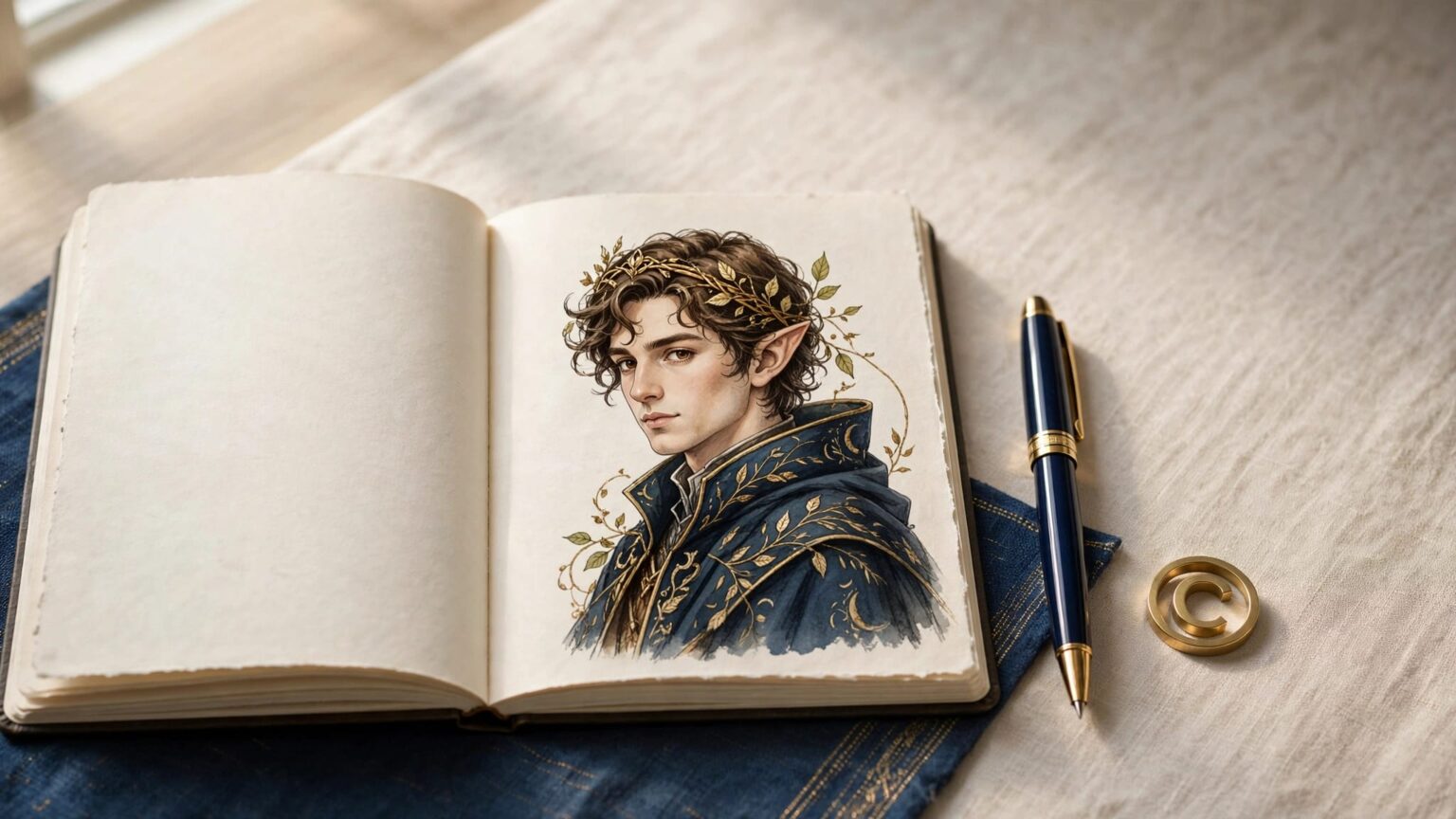
Can You Copyright a Fictional Character Under U.S. Law?
Yes, U.S. copyright law can protect a fictional character when its original, developed expression goes beyond a general idea or stock type. Protection can cover a sufficiently distinctive literary or visual character, but it doesn’t give you ownership of every similar personality, role, or premise.
For writers, illustrators, and game developers, the distinction affects adaptations, merchandise, and enforcement. Your strongest position starts with specific creative expression, documented ownership, and timely registration.
The first step is separating the character you’ve created from the ideas everyone remains free to use.
Table of Contents
ToggleKey Takeaways
- A developed character may receive copyright protection, while a name, broad concept, or familiar archetype alone won’t.
- Courts assess character protection under different approaches, so no single checklist controls every U.S. dispute.
- Registration supports enforcement, but contracts determine whether you actually own the rights you’re asserting.
- Trademark, publicity rights, and licensing agreements address issues that copyright alone doesn’t resolve.
What Copyright Protects in a Fictional Character
Original expression fixed in a work
Under 17 U.S.C. § 102, copyright protects original authorship recorded in a tangible medium. That includes manuscripts, drawings, comics, animation, and game artwork.
A character existing only in your imagination hasn’t met the fixation requirement. Once you record original expression, copyright can arise automatically.
However, protection for a book or illustration doesn’t automatically establish independent protection for every character within it. Courts may also assess whether the character has sufficiently developed, recognizable expressive qualities.
Detailed appearance, dialogue, relationships, behavior, and history can support that assessment. No particular number of traits guarantees protection.
Ideas, names, and stock types remain available
Copyright doesn’t reserve an adventurous archaeologist, a cynical detective, or a talking animal for one creator. These are general concepts.
The Copyright Office’s authorship guidance also distinguishes protectable expression from names, short phrases, and familiar material.
A character’s name alone therefore isn’t copyrightable. Yet a name or image may qualify for trademark protection when it identifies the commercial source of goods or services.
These rights address different problems. Copyright concerns copying protected expression; trademark law addresses source identification and potential consumer confusion. Neither creates unlimited control over every reference to a character.
How Courts Evaluate Fictional Character Copyright
Literary characters must exceed familiar types
In Nichols v. Universal Pictures Corp., 45 F.2d 119 (2d Cir. 1930), the court rejected an infringement claim involving similarities between Abie’s Irish Rose and another production.
Judge Learned Hand explained that increasingly abstract descriptions eventually reach material copyright doesn’t protect. Underdeveloped character types fall on that unprotected side.
For authors, adding a biography isn’t a mechanical solution. The relevant question concerns the original expression you actually created, rather than how many facts appear in a character sheet.
Courts distinguish a recognizable individual character from a collection of common traits. A familiar occupation, attitude, or family role won’t establish exclusive rights by itself.
The Batmobile shows how visual identity matters
In DC Comics v. Towle, 802 F.3d 1012 (9th Cir. 2015), the Ninth Circuit held that the Batmobile qualified for character protection.
Its analysis considered physical and conceptual qualities, sufficient delineation for recognition across appearances, and especially distinctive expressive elements.
The Batmobile’s appearance changed across productions. Nevertheless, its recognizable attributes supported protection, and the court upheld liability involving unauthorized replicas.
This is a Ninth Circuit framework, not a nationwide statutory checklist. It also demonstrates that a protectable character needn’t be human.
How to Register Copyright for Character Material
Register the work that expresses the character
Copyright registration concerns the material submitted, such as a novel, illustration, comic, or audiovisual work. It doesn’t reserve an abstract character concept across every possible future depiction.
Your application should accurately identify the author, owner, publication status, and authorship claimed. If the material incorporates someone else’s work, the claim must distinguish your original contribution.
A character bible can document visual designs, relationships, dialogue, and background. However, its title doesn’t determine protection, and registration doesn’t make unprotectable ideas exclusive.
Our guidance on copyright registration for creative works addresses the relationship between the work, application, and ownership records.
Timing affects lawsuits and available remedies
For U.S. works, 17 U.S.C. § 411(a) generally requires registration or refusal before an infringement lawsuit can proceed.
In Fourth Estate v. Wall-Street.com, 586 U.S. 296 (2019), the Supreme Court held that merely submitting an application doesn’t satisfy that registration requirement. The Copyright Office must act on it.
Section 412 separately limits statutory damages and attorney’s fees when infringement begins before effective registration. For published works, registration within three months after first publication can preserve eligibility under the statutory rule.
Registration after copying begins may support enforcement without restoring every remedy that earlier registration could have preserved.
Actual damages and attributable infringer profits may remain available, depending on the claim.
Who Owns the Character and Its Future Uses?
Payment alone doesn’t transfer copyright
A writer, illustrator, and developer may contribute different protected elements to one character. Ownership depends on authorship, employment, valid transfers, and potentially joint-authorship rules.
Paying a freelance artist doesn’t automatically transfer the copyright in their drawings. Similarly, labeling a commission “work made for hire” doesn’t make that doctrine apply unless its legal requirements are met.
Agreements should identify existing material, new contributions, assignments, and any rights the creator retains. Copyright transfers generally require a signed writing under 17 U.S.C. § 204(a).
These records form the chain of title that publishers, studios, and licensees need before investing in the property.
Define adaptations, merchandise, and sequel rights
The exclusive rights under Title 17 include reproduction, distribution, and preparation of derivative works, subject to statutory limits.
A character license should translate those rights into clear commercial permissions. Film adaptations, games, merchandise, and promotional uses can carry different terms.
For game projects, address downloadable content, ports, remasters, and sequels. For literary adaptations, distinguish rights to the existing book from rights involving future stories and characters.
Also define territory, duration, exclusivity, approvals, compensation, and rights that return when the agreement ends. A broad grant can affect opportunities far beyond the first release.
Using Existing Characters: Public Domain and Fair Use
A character’s age, popularity, or availability online doesn’t establish permission to reuse it. The analysis starts with the particular version and expression you plan to copy.
Public-domain material is different. In Klinger v. Conan Doyle Estate, 755 F.3d 496 (7th Cir. 2014), the court rejected efforts to extend copyright over Sherlock Holmes elements already established in public-domain stories.
Our discussion of the Sherlock Holmes character copyright ruling addresses that distinction. Arthur Conan Doyle’s original Holmes stories are now in the U.S. public domain, but later adaptations may contain independently protected additions.
Fair use under 17 U.S.C. § 107 can also permit some unauthorized uses. Courts consider purpose, the work’s nature, the amount used, and market effects. Calling something “fan art” or “parody” doesn’t settle the analysis.
A character inspired by a real person raises separate concerns. Changing the name doesn’t automatically eliminate defamation, privacy, or publicity-rights issues when the person remains identifiable. Copyright clearance alone won’t resolve those risks.
What to Do When Someone Copies Your Character
Preserve dated drafts, source files, contracts, registrations, and evidence of the disputed use. Retain the relevant pages or files before they disappear or change.
Next, identify what the other party copied. A shared genre or personality trait differs from reproducing distinctive artwork, dialogue, or a sufficiently developed character.
An infringement claim generally requires ownership of a valid copyright and copying of protected expression. Independent creation doesn’t infringe copyright, even when similarities exist.
Before demanding removal, assess the actual rights, any license, and potential defenses. An unsupported accusation can complicate a dispute.
At ChaseLawyers®, we help creators address copyright registration, ownership, licensing, and enforcement. Our entertainment intellectual property representation can help you determine whether the problem calls for a copyright claim, contract enforcement, trademark analysis, or a negotiated resolution.
Frequently Asked Questions
Can I protect a character before finishing my book?
Yes. Original sketches, written scenes, and other recorded material can receive copyright protection before the larger project is complete. Independent character protection still depends on what you’ve developed and expressed. An unfinished project doesn’t prevent protection, but a name and one-line premise won’t establish ownership of the broader concept.
Will changing another character’s name avoid infringement?
No. A new name doesn’t eliminate copying of protected visual or literary expression. Courts assess the material taken, rather than relying on labels alone. The same principle applies to changing a costume color or a few background details while retaining another creator’s protected expression.
Does a registration certificate guarantee character protection?
No. Registration doesn’t conclusively decide whether a character is independently copyrightable or whether another work infringes it. In litigation, the court can examine originality, ownership, the scope of protected expression, and defenses. A certificate also doesn’t transfer rights that belong to a collaborator or earlier rights holder.
Protect the Character You Actually Created
A strong fictional character copyright position rests on developed expression, clear ownership, and registration that supports enforcement. Names, archetypes, and broad premises remain outside copyright’s exclusive reach.
Before licensing an adaptation or confronting a suspected copy, identify the precise material and rights involved. At ChaseLawyers®, we help creators connect those legal protections with the contracts that govern their characters’ future uses.
- 21 SE 1st Ave, Suite 700, Miami, FL 33131
- 305-373-7665
- 305-373-7668
- info@chaselawyers.com
- 1345 Avenue of the Americas, 2nd Floor, New York, NY 10105
- 212-601-2762
- info@chaselawyers.com
Get a response within 24 hours. We’ll clearly explain how we can support and protect your brand while staying within your budget.