


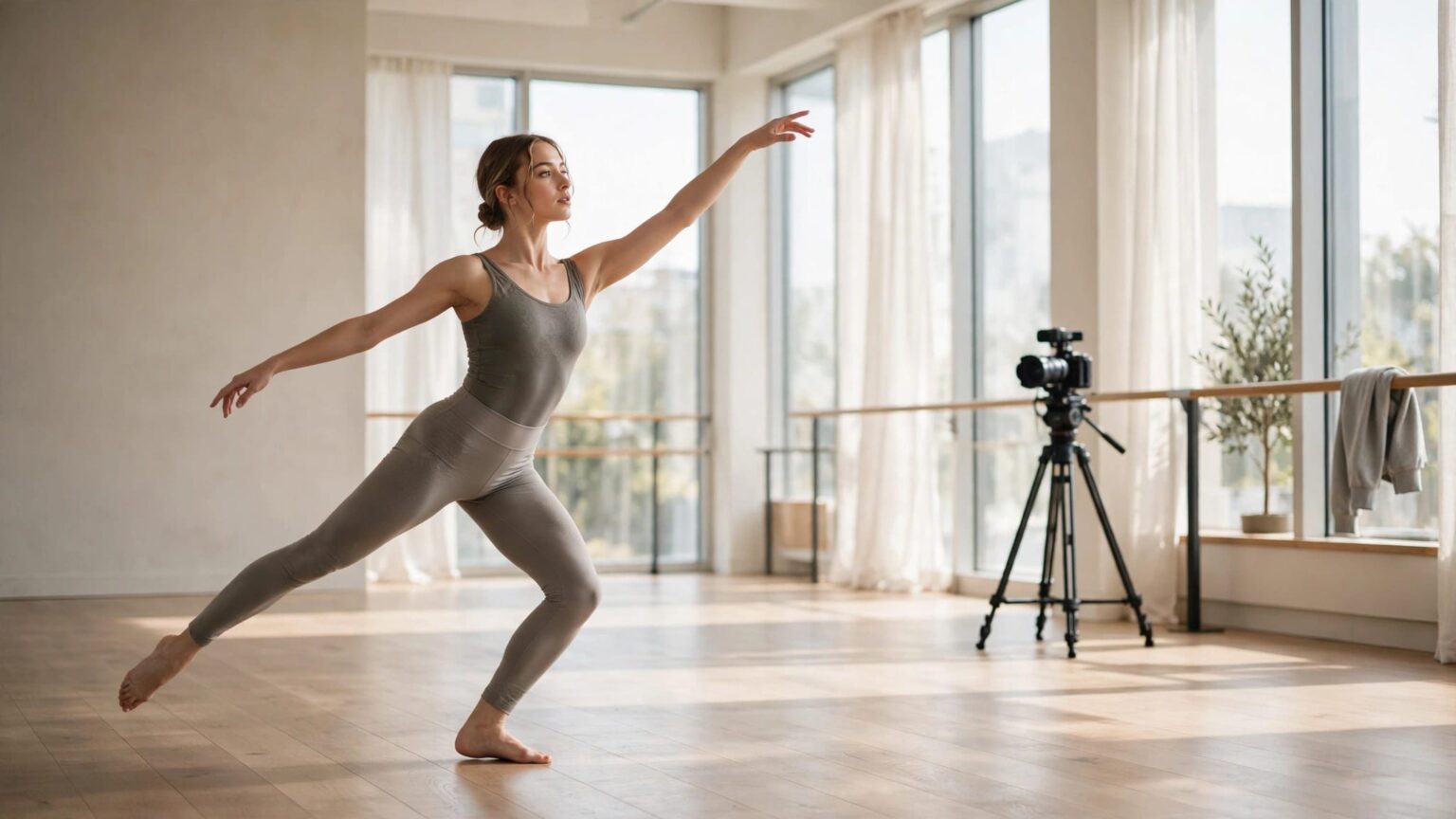
Can You Copyright Choreography Under U.S. Law?
Yes, you can copyright choreography under 17 U.S.C. § 102(a)(4) when it contains original expression and is recorded or otherwise fixed. Protection covers the expressive arrangement of movement, rather than ownership of every step.
For choreographers, dancers, and educators, that distinction affects performances, teaching, licensing, and online copying. Early registration also matters because owning copyright and being ready to enforce it are separate issues.
The starting point is identifying which parts of your work qualify for protection.
Table of Contents
ToggleKey Takeaways
- Original choreography can receive copyright protection once it is fixed through an authorized recording, notation, or another sufficiently detailed medium.
- Individual steps, simple routines, dance styles, and functional exercise systems generally remain outside copyright protection.
- Registration, clear ownership agreements, and preserved evidence strengthen your position when licensing choreography or responding to unauthorized use.
These rules apply to stage productions and digital uses, including dance videos and animated performances.
When Can You Copyright Choreography?
Section 102(a)(4) of the Copyright Act expressly includes “pantomimes and choreographic works” among eligible works. However, the choreography must still satisfy originality and fixation requirements.
Originality protects your expressive arrangement
Originality requires independent creation and at least a modest amount of creativity. Your choreography doesn’t need to introduce movements nobody has performed before.
Instead, protection can cover your original arrangement of movements, transitions, timing, and spatial relationships. Familiar steps may contribute to a protected composition when their selection and organization contain sufficient creative expression.
The Copyright Office describes choreography as related dance movements and patterns organized into a coherent whole. A narrative isn’t mandatory, and choreography doesn’t need musical accompaniment to qualify.
Protection remains limited to the expression you created. It doesn’t give you exclusive ownership of a genre or technique.
Fixation creates a record of the work
A live improvisation that nobody records or notates may lack the fixation copyright requires. Fixation must occur through the author or with the author’s authority.
A video is often the most practical record. However, Copyright Office guidance on performing arts also recognizes notation and sufficiently detailed descriptions.
The record must capture the choreography clearly enough to identify the claimed work. Preserve a complete version rather than relying entirely on promotional excerpts.
Also, distinguish the choreography from its recording. The person who films the performance may hold separate rights in the audiovisual work.
What Copyright Leaves Unprotected
Copyright doesn’t protect isolated dance steps, commonplace gestures, or social dances as such. The Copyright Office also excludes simple routines containing only a few movements with minor variations.
There is no universal minimum duration that turns movement into protected choreography. Length matters less than the expression embodied in the claimed work.
Section 102(b) separately excludes ideas, procedures, systems, and methods. Consequently, describing an exercise method as choreography doesn’t automatically make it copyrightable.
In Bikram’s Yoga College of India, L.P. v. Evolation Yoga, LLC, 803 F.3d 1032 (9th Cir. 2015), the Ninth Circuit addressed a sequence of 26 yoga poses and two breathing exercises.
The court held that the sequence was an unprotectable system designed to improve health. Copyright could protect original text or photographs describing that system, but not the system itself.
For dance professionals, the distinction is practical: expressive composition may qualify, while a training method or general movement vocabulary remains available to others.
Court Decisions That Shape Choreography Protection
Two appellate decisions show why infringement analysis must examine expressive movement rather than rely solely on duration or format.
Horgan: Still photographs can capture choreography
In Horgan v. Macmillan, Inc., 789 F.2d 157 (2d Cir. 1986), George Balanchine’s estate challenged photographs of The Nutcracker published in a book.
The Second Circuit rejected the assumption that still photographs couldn’t infringe choreography because they didn’t reproduce its continuous movement. Photographs could communicate protected aspects of a dance.
The court sent the case back for further analysis; it didn’t decide that infringement had occurred.
The lesson extends beyond printed books. Changing the medium doesn’t automatically avoid a choreography claim, although copying and substantial similarity still require proof.
Hanagami: A short excerpt requires meaningful analysis
In Hanagami v. Epic Games, Inc. (9th Cir. 2023), Kyle Hanagami alleged that a Fortnite emote copied part of his registered choreography.
The Ninth Circuit reversed the dismissal and returned the case for further proceedings. It rejected an analysis that reduced choreography to isolated poses while overlooking expressive elements such as transitions, timing, and movement.
A brief excerpt could matter because of its qualitative importance within the registered work. However, the decision didn’t establish liability or make every short sequence copyrightable.
The dispute and its implications receive further analysis in this law journal discussion of Hanagami.
How to Register Choreography
Copyright begins upon qualifying creation and fixation. Registration adds a federal record and important enforcement benefits.
Identify the choreography and submit an adequate deposit
A choreography claim generally uses the Copyright Office’s performing-arts registration process. The filing includes an application, fee, and deposit representing the work.
Identify the choreographer, claimant, title, completion year, and publication facts accurately. If the work incorporates preexisting material, distinguish that material from the new authorship you claim.
The deposit should show the choreography being registered. A video containing music doesn’t automatically establish ownership of that music or the recording.
Likewise, a registration focused on audiovisual authorship shouldn’t be assumed to cover a separate choreography claim. The application must accurately describe the authorship involved.
Register before infringement changes your options
For most U.S. works, registration or refusal is generally required before filing a federal infringement lawsuit. In Fourth Estate Public Benefit Corp. v. Wall-Street.com, LLC (2019), the Supreme Court held that submitting an application alone ordinarily isn’t enough.
Nevertheless, an approved registration’s effective date can be the date the Office received an acceptable application, deposit, and fee.
Under Section 412’s registration timing rules, delayed registration can restrict statutory damages and attorney’s fees. Qualifying published works have a three-month registration window after first publication.
A public performance alone isn’t publication. Online release facts therefore deserve careful legal analysis.
Who Owns the Choreography and Licensing Rights?
The choreographer ordinarily owns the copyright initially, unless work-made-for-hire rules or other ownership arrangements apply. Paying for a routine doesn’t automatically transfer its copyright.
An employee’s choreography created within the scope of employment may belong to the employer. Commissioned work qualifies as work made for hire only when statutory requirements, including an eligible category and signed agreement, are satisfied.
Similarly, collaborators may create joint authorship issues. Written agreements should identify contributions and address ownership before rehearsals develop into commercial exploitation.
Section 106 gives owners rights that include reproduction, adaptation, distribution, and public performance, subject to legal limitations. A license should therefore define permitted uses rather than simply grant permission to “use the dance.”
Specify whether permission covers live performances, instructional videos, advertisements, social posts, or game animation. Address duration, territory, editing, payment, and sublicensing.
Choreography permission also doesn’t clear the accompanying song. Music and recording rights require separate analysis.
What to Do If Someone Copies Your Choreography
Preserve the suspected use before requesting removal. Save the complete video, relevant screenshots, account details, URLs, dates, and communications.
Then assemble your own authorship record. Rehearsal footage, choreographic notes, cloud version history, contracts, and dated correspondence can help establish creation and ownership. Metadata supports that record, but shouldn’t carry the claim alone.
Keep the application, deposit, certificate, receipt, and Copyright Office correspondence together. Our guidance on preserving copyright infringement evidence explains why these records matter.
Next, distinguish shared dance vocabulary from copied protected expression. Similar style, inspiration, or use of familiar steps doesn’t establish infringement.
Depending on the facts, the response may involve a licensing discussion, platform complaint, DMCA notice, demand letter, or lawsuit. Registration isn’t required to send a DMCA notice, but fair use and ownership still matter.
A takedown request should identify the protected choreography, rather than claim exclusive rights over every movement appearing in it.
How We Help Protect Your Choreography
At ChaseLawyers®, we help creative professionals connect copyright protection with registration, ownership documentation, licensing, and enforcement.
For choreography, that means identifying the authorship being claimed, reviewing who controls the rights, and preparing agreements that match the intended use. When copying occurs, we assess the evidence and available response.
Our copyright registration and enforcement services support that process before and after a dispute. Registration is one part of a protection strategy; contracts and reliable records support it.
Frequently Asked Questions About Choreography Copyright
Can I copyright a dance posted on TikTok or Instagram?
Potentially. The choreography must contain sufficient original expression and meet fixation requirements. Posting a video doesn’t make an otherwise unprotectable routine eligible. Also, uploading doesn’t itself register the choreography with the Copyright Office.
Can a dance teacher use copyrighted choreography in class?
Educational purpose doesn’t create blanket permission. Fair use depends on the circumstances, and Section 110 contains separate exceptions for certain teaching performances. Those exceptions don’t automatically authorize copying instructional videos, distributing recordings, or staging public recitals.
Does giving the choreographer credit replace permission?
No. Attribution doesn’t substitute for a license when permission is legally required. Credit terms can be part of a license, but naming the creator doesn’t independently authorize copying, commercial adaptation, or public performance.
How long does choreography copyright last?
For most individually authored works created after 1977, protection lasts for the author’s life plus 70 years. Works made for hire generally receive 95 years from publication or 120 years from creation, whichever expires first.
Protect the Composition You Created
You can copyright choreography when original expression is fixed, but protection doesn’t extend to every individual step. The strongest position combines a clearly documented work with accurate ownership agreements and timely registration.
Before a routine enters a production, classroom recording, or commercial campaign, define who may use it and how. Clear rights and reliable records make both licensing and enforcement more practical.
- 21 SE 1st Ave, Suite 700, Miami, FL 33131
- 305-373-7665
- 305-373-7668
- info@chaselawyers.com
- 1345 Avenue of the Americas, 2nd Floor, New York, NY 10105
- 212-601-2762
- info@chaselawyers.com
Get a response within 24 hours. We’ll clearly explain how we can support and protect your brand while staying within your budget.