


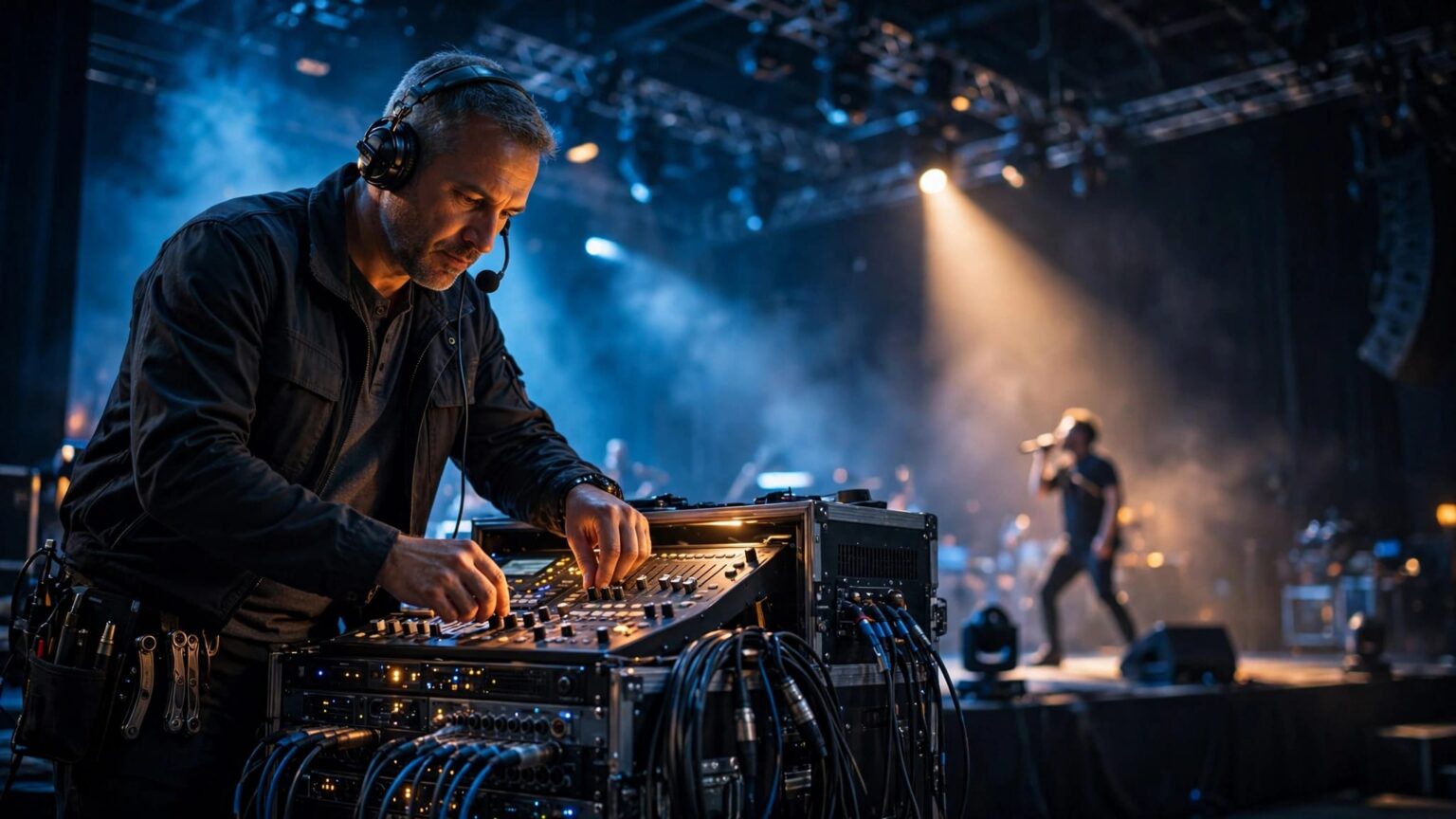
O-2 Visa Requirements for Essential Entertainment Support
A successful U.S. performance, tour, or production often relies on people whose work stays out of the spotlight. Yet an O-2 petition does not approve every valued crew member. It must show that the person brings specialized, indispensable support to a qualifying O-1 artist or athlete.
Understanding O-2 visa requirements early helps production companies, agents, and artists avoid a filing that describes a job as important without proving why it cannot be readily filled by another worker. The strongest cases connect the individual’s background, technical role, and U.S. itinerary in one clear record.
Table of Contents
ToggleKey Takeaways
- O-2 classification is for support personnel who temporarily accompany and assist an O-1 artist or athlete during a qualifying event, performance, or production.
- The worker must have critical skills and experience that are not general in nature and are not readily available from a U.S. worker.
- An O-2 beneficiary cannot use the classification for independent work apart from the O-1 principal.
- Form I-129, contracts or deal memos, an itinerary, detailed role statements, and an advisory opinion are central parts of the petition.
- Film and television cases follow a distinct standard that focuses on the person’s current essentiality and continuity in completing the production.
- A change in the O-1 principal’s employment arrangement can affect the O-2 worker’s status and should be reviewed before work begins.
How O-2 Classification Works in Entertainment
The legal authority for O classification appears in INA section 101(a)(15)(O) and 8 C.F.R. 214.2(o). It permits an O-2 beneficiary to enter the United States temporarily and solely to accompany and assist a qualifying O-1 beneficiary.
The O-2 Role Is Tied to an O-1 Principal
An O-2 is not a stand-alone entertainment work visa. The person’s work must support an O-1 artist, entertainer, or athlete during the activities described in the petition.
For example, a touring musician’s long-time musical director may qualify if that director has distinctive knowledge of arrangements, cues, and show mechanics. A specialized lighting programmer, movement coach, or instrument technician may also qualify when the facts show their skills are bound to the O-1’s actual performance.
The O-1 case matters because the O-2 filing depends on it. Managers preparing an O-2 strategy should first confirm that the principal’s schedule, petitioner, and supporting evidence are in order. See Chase Lawyers’ O-1B visa guidance for entertainers for the principal artist’s petition framework.
Essential Means More Than Helpful
Entertainment projects depend on many capable professionals. USCIS does not treat every trusted assistant, road crew member, or production employee as essential support personnel.
USCIS guidance for O-2 beneficiaries requires evidence that the worker’s role is integral to the O-1’s performance or event. The person must also possess critical skills and experience that are not of a general nature.
A statement that a worker is “vital” or “key” is not enough. The petition should explain what the worker uniquely knows, how that knowledge developed, and what work the O-1 cannot reasonably perform without that person.
Core O-2 Visa Requirements for Support Personnel
The O-2 standard turns on the connection between the individual, the O-1 principal, and the proposed U.S. work. A job title alone does not establish eligibility.
Critical Skills and Specialized Experience
A persuasive filing describes a concrete skill set. For a sound engineer, that may mean intimate knowledge of a performer’s custom playback system, vocal processing, timecode cues, and touring file architecture. For a choreographic assistant, it could mean years of rehearsing and maintaining a particular artist’s movement language.
The record should show why the person’s experience goes beyond normal competence in the profession. Letters from the O-1, tour director, producer, or creative executive should identify particular responsibilities rather than repeat broad praise.
Prior foreign contracts, backstage credits, production call sheets, rehearsal records, press materials, and payroll documents can support those statements. The evidence should show a sustained working relationship when one exists.
A Temporary, Specific U.S. Engagement
The proposed work must be temporary and linked to identified activities. A petition should align performance dates, venue holds, production dates, agreements, and travel plans.
USCIS expects an itinerary when events or activities take place in more than one location. It should identify dates, locations, employers or presenters, and the nature of each engagement. Conflicts between a tour announcement, artist agreement, and itinerary can weaken an otherwise strong case.
The worker must also maintain a foreign residence that they do not intend to abandon. That requirement fits the temporary purpose of O-2 classification and should be considered when planning long U.S. engagements or repeated extensions.
A detailed description of a worker’s technical duties is useful only when it also explains why those duties require that particular person’s established experience with the O-1.
Film and Television Cases Need a Different Showing
Motion-picture and television productions use a tailored O-2 standard. The petitioner must establish the individual’s current essentiality, critical skills, and experience with the O-1 beneficiary. It may also show that the worker’s ongoing participation is essential to complete the production.
This distinction matters for a cinematographer’s specialized collaborator, an artist’s continuity-dependent production staff member, or a technical professional who knows a complex production system already in progress. The petition should identify the stage of production and explain the disruption that replacing the worker would create.
General statements about a tight shooting schedule will not carry the case. A stronger record identifies the production role, work performed outside the United States, dates of collaboration, equipment or workflow expertise, and tasks assigned in the U.S.
Because supporting personnel classifications differ by category, a culturally unique program may call for a different route. Chase Lawyers’ overview of P-3S visas for essential support personnel explains the separate standard for support workers tied to P-3 artists.
Evidence That Makes an O-2 Petition Credible
O-2 visa requirements are evidence-driven. USCIS officers need a coherent account that matches the legal standard and the real production plan.
Build the Role Description Around Facts
Start with a detailed statement from the petitioner. It should explain the O-1’s work, the O-2 beneficiary’s role, the specific services required, and the connection between those services and each listed event.
Then support the statement with independent records. Useful documents may include prior contracts, deal memos, artist or production credits, dated photos or programs, payroll records, technical rider excerpts, cue sheets, rehearsal schedules, and letters from producers or managers.
Letters work best when each writer has direct knowledge of the relationship. A producer who supervised a prior international tour can describe the worker’s role, the skills involved, and why continuity matters. Template letters with identical wording carry little weight.
Keep the O-1 and O-2 Records Consistent
The O-1 and O-2 filings should tell the same story about the engagement. Names, dates, venues, production titles, and job duties should match across contracts, itineraries, consultation materials, and support letters.
A useful starting point is the firm’s O-1B evidence checklist, because the O-1 principal’s schedule and proof set the foundation for the support case. However, an O-2 package needs its own proof of essentiality, not a copy of the artist’s acclaim evidence.
The Ninth Circuit’s decision in Kazarian v. USCIS, 596 F.3d 1115 (9th Cir. 2010), involved an O-1 extraordinary-ability petition, not an O-2 support case. Still, its two-step evidence analysis offers a useful warning: meeting a document category does not excuse a weak overall record. Each exhibit should reinforce the same factual account.
Form I-129, Consultation, and Filing Timing
The U.S. employer or U.S. agent files Form I-129 with USCIS before the beneficiary seeks a visa stamp or admission. Every O-1 and O-2 beneficiary needs an approved petition before visa issuance, subject to the rules that apply to visa-exempt travelers.
Required Filing Materials
USCIS documentation guidance identifies the central petition components: the required form, a written contract or summary of an oral agreement, an itinerary or event details, and supporting evidence for the requested classification.
The petitioner must also include a written advisory opinion from the relevant labor organization or peer group. For motion-picture and television productions, consultation generally involves the appropriate labor union and a management organization.
Consultation is not a formality. The opinion should address whether the worker’s services are essential to the O-1’s performance or production. Petitioners should allow time for the union or peer group process instead of treating it as a last-minute attachment.
File Before the Work Is Needed
USCIS does not permit a petitioner to file more than one year before the beneficiary’s services are actually needed. That rule affects lengthy tour planning and productions with dates that shift often.
A filing should begin only after the team has a reliable schedule and signed or well-documented engagements. At the same time, waiting for final publicity materials can leave too little room for a request for evidence or consular processing.
Check the current Form I-129 filing instructions and fees before submission. USCIS fees can change, and a petition may be rejected if it includes incorrect payment or outdated forms.
Status Limits, Changes, and Extensions
An approved O-2 worker may perform only the support services described in the petition and only in connection with the O-1 beneficiary. Separate freelance work, unrelated studio sessions, or a new production outside that relationship can create a status problem.
USCIS states that an O-2 beneficiary may not work separately or apart from the O-1 they support. A change of employer is also tied to a corresponding change involving the O-1 principal.
Extensions depend on the continuing need for the services and the underlying events or production. Before adding dates, replacing a petitioner, or expanding a tour, review whether an amended or new filing is needed. Production changes that look routine on a call sheet can have immigration consequences.
Chase Lawyers helps artists, managers, and production companies align contracts, schedules, and petition evidence before those inconsistencies become obstacles.
FAQ About O-2 Support Personnel
Can a tour manager qualify for an O-2 visa?
Possibly, but the title alone does not qualify the person. The petition must show that the manager has critical, non-general skills and experience essential to the O-1’s specific tour, such as knowledge of a complex production system or an established operational role with the artist.
Can an O-2 beneficiary work for another artist?
No. O-2 status is tied to accompanying and assisting the O-1 principal named in the approved petition. The beneficiary cannot take separate engagements for other artists or employers under that approval.
Is an O-2 case appropriate for every backstage worker?
No. The classification does not cover ordinary crew staffing needs. A petitioner must prove that the individual is integral to the performance or production and brings specialized skills or experience that a U.S. worker could not readily provide.
Final Thoughts on O-2 Visa Planning
A strong O-2 petition shows more than loyalty to a performer or production. It proves that a particular professional has essential, specialized experience tied to a real O-1 engagement.
For entertainment teams, early planning protects the itinerary, contracts, and working relationships that make the case credible. Chase Lawyers can assess eligibility, prepare the petition record, coordinate consultation requirements, and help creative professionals pursue U.S. opportunities with a legally sound immigration strategy.


- 21 SE 1st Ave, Suite 700, Miami, FL 33131
- 305-373-7665
- 305-373-7668
- info@chaselawyers.com
- 1345 Avenue of the Americas, 2nd Floor, New York, NY 10105
- 212-601-2762
- info@chaselawyers.com
Get a response within 24 hours. We’ll clearly explain how we can support and protect your brand while staying within your budget.