


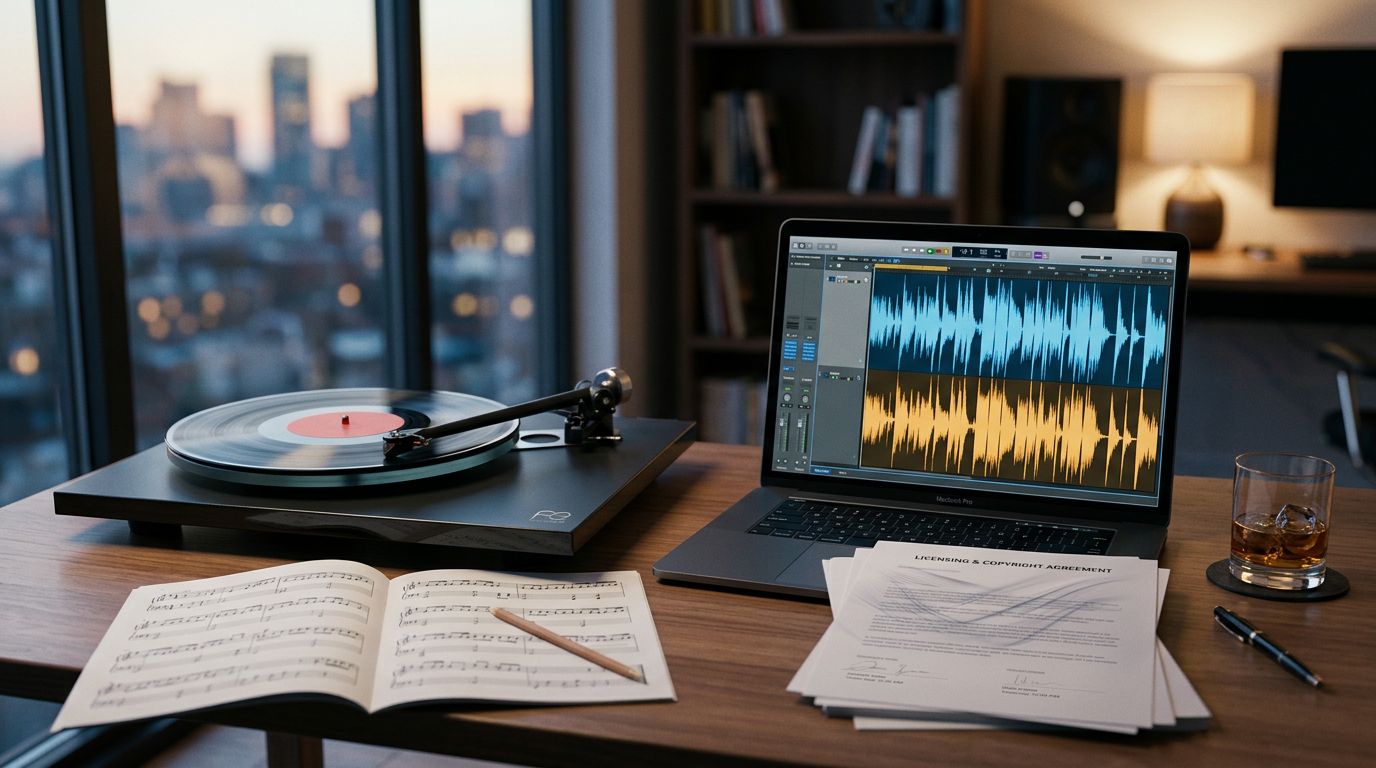
Cover Song Licenses Before Release Day
Releasing a cover can feel simple. You track the song, send it to your distributor, and expect it to go live everywhere at once. The legal side is different, because cover song licenses change with the way you plan to use the music.
A straight audio release, a vinyl run, a lyric video, and a TikTok promo do not live under one rule. If you want the song to stay up, earn money, and avoid a last-minute claim, clear the rights before release day.
Table of Contents
ToggleStart with the mechanical license
For most artists, the first license is a mechanical license. In the United States, this is the license that lets you record and distribute your own version of someone else’s song. It covers the underlying composition, meaning the melody and lyrics written by the songwriter and controlled by the publisher.
That point matters because a cover has two separate assets. The song itself belongs to the copyright owner of the composition. Your new recording is a separate master, and you usually own or control that master once you make it.
Under Section 115 of the Copyright Act, a qualifying cover can fall under a compulsory license. In plain English, that means you usually do not need the original artist’s personal approval if the song has already been released to the public in the United States and you follow the legal rules. You still have to get the license, pay royalties, and report uses where required.
There are limits. A compulsory mechanical license does not apply to an unreleased song. It also does not give you the right to use the original sound recording. If you pull audio from the famous version, or use the original instrumental, you have moved into a different rights problem.
This is where many independent releases go sideways. Artists assume “it’s a cover, so it’s fine,” and skip the paperwork. It isn’t fine if you sell downloads, press CDs, or fail to clear the composition properly. When ownership is unclear or the release plan is bigger than one streaming upload, artists often need expert music licensing legal guidance before they lock the date.
Streaming changed the process, not the rule
Streaming made cover releases easier, but it did not erase the license. Because of the Music Modernization Act, interactive streaming services handle much of the U.S. mechanical licensing process for streams on platforms like Spotify and Apple Music. That is why many distributors simply ask whether your upload is a cover and then collect the needed data.
Still, artists should not treat that prompt as total clearance. Your distributor may help with one release path and not another. If you also sell downloads from your own site, offer Bandcamp-style purchases, or press physical copies, you may need a separate mechanical license for those uses.
As of 2026, the U.S. statutory mechanical rate for songs up to five minutes is 12.4 cents per copy for permanent downloads and physical units. Longer songs use a higher per-minute calculation. If you are handling those uses yourself, a service like Songfile by Harry Fox Agency is a common starting point for many U.S. covers.
Ownership checks still matter. Before release day, confirm the songwriters and publishers through reliable repertory tools such as ASCAP, BMI, or Songview. If the ownership trail looks messy, stop and sort it out. Sending royalties to the wrong party does not fix an unlicensed release.
For a plain-English overview of the basics, Bandzoogle’s guide to legal cover songs tracks the same core rule: a cover needs a mechanical license, even when the original artist never answers your email. The system may feel old, but the rule still runs the show.
Video creates a separate clearance problem
The moment your cover becomes a video, the legal picture changes. A music video, lyric video, visualizer, live session clip, or social post that pairs the song with images usually needs a synchronization license, often called a sync license. That license comes from the owner of the composition, and it is not covered by the compulsory mechanical system.
This is the mistake artists make most often. They clear the audio side, upload the song to streaming services, then cut a simple video for YouTube or Instagram. Because the song is now synced to visual content, you usually need direct permission from the publisher or whoever controls the sync right.
A Content ID claim is not the same thing as a sync license.
YouTube can monetize a video for the rights holder, block it, or leave it up with restrictions. None of those outcomes means you had the right to post it in the first place. Platform tools manage disputes after upload. They do not replace clearance before upload.
If your video uses any part of the original master recording, you also need a master use license from the owner of that recording, often a label. A standard cover avoids this problem because you record everything yourself. The second you use the original track, stems, or a recognizable clip, your checklist gets longer.
Court decisions draw these lines in useful ways. In Campbell v. Acuff-Rose Music, Inc., the U.S. Supreme Court treated parody under fair use rules, not as an ordinary cover. That matters because many artists rewrite lyrics for humor or commentary and assume it still counts as a normal cover. Once you turn the song into a parody or another derivative version, the simple cover-song path may disappear.
How much can you change in a cover?
You can change a lot and still stay inside normal cover rules. A new key, slower tempo, fresh groove, different instrumentation, or a stripped acoustic arrangement usually fits. Those changes interpret the song. They do not rewrite the composition.
Problems start when you alter the song’s protected expression. If you change the melody in a major way, rewrite verses, add new lyrics, translate the song into another language, or combine it with another composition, you may need direct approval from the copyright owner. A compulsory mechanical license does not give you free rein to create any version you want.
That is why mashups and medleys often require more than one permission. You are not simply recording one song as written. You are building a new derivative work from multiple copyrighted pieces. The same issue comes up with “cover remixes” that borrow original hooks, spoken intros, or signature instrumental parts.
Sampling adds another layer. If you sample the original recording, you are not dealing only with cover song licenses anymore. You may need clearance for the composition and separate permission for the sound recording. Those are different owners in many deals, so one yes does not cover the other.
A compulsory mechanical license lets you record a song as a cover. It does not give you blanket permission to create a new derivative work.
This is where legal review saves time. Artists often do not realize they crossed the line until a distributor flags the release or a publisher sends a complaint. If the version has changed lyrics, added comedy, switched language, or blended multiple songs, get answers before the file goes out.
Live performances and social clips follow different rules
A live cover at a club or theater usually runs through public-performance licenses held by the venue, promoter, or platform. In many cases, the venue already has licenses with performing rights organizations such as ASCAP, BMI, SESAC, or GMR. That is why bands can play famous songs on stage without getting a separate mechanical license for the live act itself.
However, live performance rules do not solve your release problem. If you record that performance and distribute the audio, you are back in mechanical-license territory. If you post the filmed performance online, you have added sync concerns too.
Social media makes this even more confusing. A short clip on TikTok or Instagram may sit inside platform-level music deals, yet those deals are narrow and can change. They also may not protect a commercial campaign, a branded post, a paid ad, or a full-length cover video on your own channel. Managers should treat social promotion as its own rights check, not as an automatic free pass.
Lyric videos are another trap. They look simple because the visuals are minimal, but they still pair music with visual content. In most cases, that means sync permission is still part of the conversation. The same goes for visualizers, rehearsal footage, and behind-the-scenes clips built around the cover.
Small teams often assume “we are only teasing 30 seconds” or “the platform has the song in its music library.” Those details can matter, but they do not replace actual clearance for a planned release campaign. If a cover is part of a roll-out, treat every clip, trailer, and video asset as a rights question before you hit publish.
Match the license to the release plan
The easiest way to avoid mistakes is to tie each use to a specific right. This quick chart keeps the main release paths straight.
| Release plan | Rights usually needed | Who often handles it |
|---|---|---|
| Audio cover on Spotify or Apple Music | Mechanical for the composition | Streaming systems and distributor workflows often cover much of this |
| Direct download sales, CDs, vinyl | Mechanical for the composition | Artist, label, manager, or licensing service |
| YouTube video, lyric video, visualizer | Sync license, and sometimes mechanical depending on distribution | Usually cleared directly with the publisher or rights holder |
| Using any original audio from the famous version | Master use license, plus composition rights | Cleared directly with the label and publisher |
| Live club or festival performance | Public-performance rights | Usually the venue, promoter, or platform |
The takeaway is simple. “Cover song license” is not one box you check once. The answer changes with the format.
Before release day, verify the writers and publishers, tell your distributor the track is a cover, keep copies of any license receipts, and map out every use tied to the song. That includes audio, video, physical product, website sales, and promo clips. If your team runs a small catalog or multiple artist releases, good records matter as much as the license itself.
For labels and publishing teams, the admin side gets heavy fast. A missed publisher share, a bad metadata entry, or a video posted without sync approval can stall revenue across several channels. That is why some teams rely on legal support for music labels and publishers before a cover campaign goes live.
Chase Lawyers can step into this stage when the ownership trail is unclear, the arrangement has changed, or the release plan includes video and physical sales. The firm is a boutique practice with offices in Miami and New York, and it works with musicians, producers, influencers, labels, and creative brands that need clear answers before a project launches.
Why cover releases still fall apart at the last minute
Most bad cover releases do not fail because the song choice was illegal. They fail because someone assumed a platform, distributor, or old industry myth handled every right in the chain. That belief shows up in the same forms every time.
One artist thinks streaming clearance also covers YouTube. A manager thinks changing the bridge made the song “original enough.” A small label uses the original instrumental for speed and forgets that the master belongs to someone else. By the time the problem appears, the release date is already public and ad money is already spent.
Money is part of the risk, but so is momentum. A takedown can kill playlist traction, freeze payments, and leave collaborators fighting over who missed the step. Copyright claims can also bring settlement pressure, and in some cases infringement suits can seek damages and attorney’s fees under U.S. law.
Chase Lawyers is built for this kind of problem. The firm focuses on entertainment, media, arts, sports, and intellectual property work, and it represents creative clients who need practical rights advice, not generic templates. Its mission is straightforward: protect talent, protect ownership, and turn legal friction into a clear plan. When a release calls for publisher outreach, contract review, royalty language, or broader legal counsel for licensing and IP rights, that kind of focused help can keep a cover from turning into a dispute.
Final thoughts
Before release day, sort the rights by use. A straight audio cover usually points first to the mechanical license. Video, changed lyrics, direct download sales, or any use of the original master can add more steps fast.
That is why smart artists do the rights check early. If your cover includes a video plan, a custom rewrite, or unclear ownership, get it reviewed before the track goes live. A clean release beats pulling a song after fans already found it.
- 21 SE 1st Ave, Suite 700, Miami, FL 33131
- 305-373-7665
- 305-373-7668
- info@chaselawyers.com
- 1345 Avenue of the Americas, 2nd Floor, New York, NY 10105
- 212-601-2762
- info@chaselawyers.com
Get a response within 24 hours. We’ll clearly explain how we can support and protect your brand while staying within your budget.