A two-second sample can stall an entire release.
If you upload first and sort rights later, you can end up with takedowns, frozen royalties, or a demand letter when the song starts gaining traction. A solid sample clearance checklist helps you catch the legal problems before your distributor, a label, or the original rights holder catches them for you.
The work starts long before release week, and it starts with knowing exactly what you copied.
Start with the two rights you may need to clear
Most sample issues begin with one mistake: treating “the song” as one right. In U.S. law, a track usually holds at least two separate copyrights, the musical composition and the sound recording. If you sample an existing recording, you may need permission for both.
The composition covers the underlying music and lyrics. That right usually belongs to songwriters and publishers. The sound recording covers the actual recorded performance, which often belongs to a label or the artist who owns the master.
If you copied audio from an existing recording, clearing only the publishing side usually isn’t enough.
This quick view helps keep the rights straight:
| What you used | Rights involved | Typical permission needed |
|---|---|---|
| Direct audio from an existing song | Composition and sound recording | Publisher approval and master-use approval |
| A replayed melody or lyric | Composition only, if no original audio was copied | Publisher or songwriter approval |
| A sound from a licensed sample pack | Depends on the pack license | Follow the pack terms, and verify limits |
That split matters because each owner can say yes, no, or “yes, but only on my terms.” As Nolo’s explanation of when permission is needed for sampled music points out, public distribution is where this issue becomes hard to ignore. The WIPO review of music sampling law reaches the same basic point: using protected material without permission is treated as copyright use, not a casual borrowing.
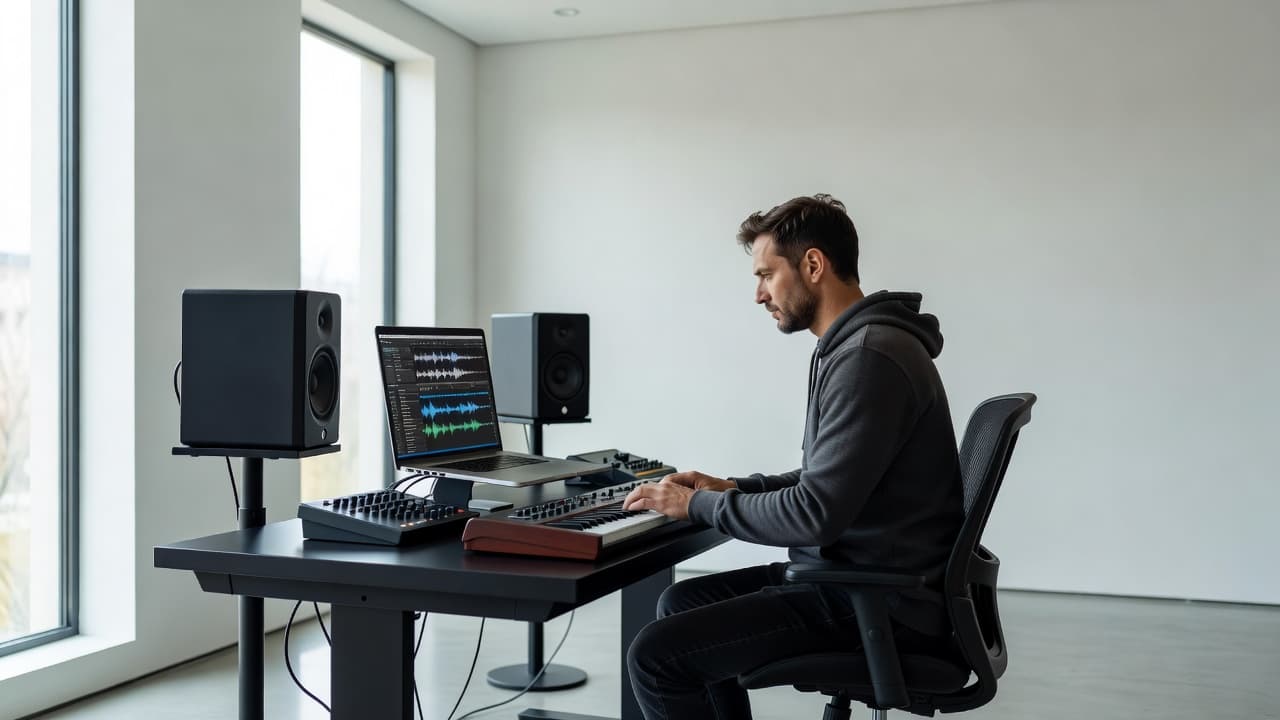
A lot of artists still assume a short clip is too small to matter. Sometimes the practical risk is lower with tiny uses, but “small” is not a clearance strategy. Your release plan should assume that any recognizable or copied audio could trigger a claim.
A sample-clearance checklist you can use before release
A good checklist is less about paperwork and more about accuracy. You need to know what was used, who owns it, and what they allowed.
Identify every borrowed sound in the final version
Start with the exact file you plan to release, not an older bounce. Then compare that file against your session, stems, beat drafts, and collaborator exports.
Producers often remember the obvious sample and forget the less obvious ones. A vocal chop from an old session, a texture lifted from YouTube, an intro pulled from a movie rip, or a stem sent by a co-producer can all create clearance problems. The same goes for AI stem separation if it pulled audio from a protected recording.
Make a plain list with time stamps. Note where the sample appears, how long it lasts, whether it was pitched or chopped, and whether it remains recognizable. Also note who brought it into the session. That last detail matters when several people worked on the beat.
If you used a loop or one-shot from a library, pull the license now. Royalty-free does not always mean unrestricted. Some licenses ban isolated resale, major-label placements without extra terms, or uses that let others extract the sound.
Confirm who owns the master and the publishing
Once you know what you used, trace ownership. For the master, look at label credits, streaming credits, release metadata, or prior licensing info. For the composition, look at songwriter and publisher data through performing rights sources and official credits.
This step gets messy fast. Songs change hands. Catalogs get sold. Writers may split publishing among several companies. A sample from a 1970s track might now involve a label, a reissue company, and multiple publishers. If you contact the wrong party, you lose time and may think the sample is clear when it isn’t.
You also need to ask whether the recording and song match. In some disputes, people assume the master owner controls everything. They don’t. The composition side may have a different set of owners with their own approval rights and price expectations.
If ownership is unclear, stop guessing. That is usually the point where a music lawyer saves more money than a rushed release costs. Chase Lawyers, a boutique entertainment firm with offices in Miami and New York, works with musicians, producers, influencers, and creative brands on rights issues like these. They can sort ownership, review chain-of-title problems, and contact the right parties before the release date becomes a problem.
Ask for permission early, and budget for a refusal
Sample clearance takes time. Rights holders may ignore the first email, ask for more details, or reject the use outright. Because of that, don’t set your release calendar around the most optimistic outcome.
When you request approval, send clean information. Include the original song, the exact portion used, the new track, the artist name, the intended release date, and how the sample appears in the new work. A rights holder will usually want to hear the new version before agreeing.
You should also expect real business terms. Common asks include an upfront fee, a royalty percentage, a publishing share, credit language, an audit clause, approval over edits, and limits on where the song can appear. TikTok, YouTube, film, TV, ads, and games may all be treated differently.
Silence is not permission. Verbal approval is not enough either. If the answer is no, your best move is to replace the sample, replay the part, or make a new beat. Releasing first and hoping nobody notices is a poor gamble.
Put the terms in writing, then match them to the release plan
Once approval comes in, get a signed agreement that matches the final song. That agreement should identify the sampled work, the new work, the approved use, the ownership split, payment terms, credit, and where the song may be distributed.
Watch for hidden mismatches. A clearance might cover DSPs but not sync. It might approve one version but not a later edit. It may allow the sample only in a certain territory, only for one artist name, or only if the sample remains below a set length. If you change the song after clearance, review the deal again.
This is also where label teams and managers should check the distributor paperwork. Most distributors require you to warrant that you own or control the rights in the release. If your contract promises more than your clearance gives you, you have a problem before the file even goes live.
Keep every signed document in one folder with the final mix, stems, split sheet, and source notes. Memory fades. Email threads get lost. Clean records save you when a question comes up six months later.
Replay, interpolation, and cover versions change the math
A lot of artists try to avoid sample clearance by replaying the part. Sometimes that works, but only for part of the problem.
If you replay a melody or lyric from scratch and do not copy the original recorded audio, you may avoid the master-use side. You still may need permission for the composition, because the underlying writing remains protected. That kind of use is often called interpolation.
Interpolation can still be expensive. A publisher may ask for a songwriting share, a fee, or approval over the final lyric and melody. If the replay is close to the original hook, expect scrutiny.
Cover rules don’t fix this either. A standard cover license usually lets you record and distribute your own version of a song, but it doesn’t let you sample the original recording. It also doesn’t cover major lyric changes or borrowed parts that turn the new song into something more than a straight cover.
Be careful with tech-assisted “replays.” If you used stem tools to isolate the original vocal, drum break, or guitar line, you probably copied the original recording. Calling it a replay won’t change that.
Common traps that blow up a release
The first trap is the “everybody uses it” defense. A sample that floated around Discord, Reddit, or producer chats may still belong to someone. Popular misuse does not create legal permission.
The second trap is assuming royalty-free means unlimited. Many packs allow commercial use, but some restrict resale, standalone distribution, or high-profile placements. Others ban use in ways that let the raw sample be extracted. Read the license you received, not a reposted screenshot.
Another common mistake is trusting a beat lease without checking what is inside the beat. If the producer used an uncleared sample, your lease does not wipe away that issue. The same concern applies to songs bought from online marketplaces. You need to know whether the seller had the right to include the material in the first place.
Age is another source of confusion. An old song is not automatically public domain, and an old recording is not automatically free to sample. U.S. copyright terms are long, and older works can involve separate rights with separate timelines.
Social clips create trouble too. If your song goes to TikTok, Instagram, YouTube Shorts, or Content ID systems, the sample can get flagged there even if your DSP delivery seems fine at first. Clearance needs to fit the whole release plan, not just Spotify and Apple Music.
What U.S. law and recent cases say right now
U.S. copyright law gives owners the right to control reproduction, derivative works, and distribution. In plain terms, if you copy protected music into a new track, you step into an area the owner controls unless an exception applies.
Courts still treat sampling as risky. Older decisions made that point clearly, and the newer cases have not changed the basic rule. What has changed is how some courts look at proof and the scope of the claimed rights.
In the recent case Eddie Richardson v. Karim Kharbouch, the Seventh Circuit highlighted that a plaintiff needs proof of actual sampling for a sound-recording claim, not just a claim that two tracks sound alike. That matters in litigation because similarity alone may not carry the day on the master side.
A different recent ruling, the Ed Sheeran “Thinking Out Loud” appeal, was about composition rights rather than beat sampling. Still, it matters because the Second Circuit stressed that some older songs protected under the 1909 Copyright Act may have narrower protection tied to the deposited sheet music. That can limit what a plaintiff claims in certain older composition cases.
Those rulings do not create a free pass. They mostly affect proof and scope. They do not erase the two-rights structure that drives sample disputes. If you copied audio from a protected recording for a commercial release, the safer reading of current U.S. law is still simple: clear it first, or change the track.
When a lawyer should step in
Some sample issues are easy enough to spot, but they are not easy to solve. If you can’t identify all owners, if multiple publishers are involved, or if the release has label money behind it, legal help is a smart move early.
Chase Lawyers can solve that problem. The firm focuses on entertainment, media, and intellectual property matters, and its team works with artists, musicians, producers, and creative businesses that need direct, practical rights advice. For sample clearance, that can mean tracing ownership, negotiating with master and publishing owners, reviewing producer agreements, and making sure the final paperwork fits the planned release.
That matters beyond one single. If a track contains hidden sample issues, it can also hurt future deals, licensing, or catalog sales. Later due diligence often starts with copyright ownership verification for music catalogs, and uncleared uses can slow or shrink a deal.
If a release is already live and a complaint hits your inbox, quick action matters. Chase Lawyers also helps with music copyright infringement claims, including takedown issues, settlement talks, and rights enforcement.
Run one last release audit before upload
Before you send the song to your distributor, do one final pass against the cleared version.
- Compare the final master to the version approved by the rights holders.
- Confirm that both the master side and the publishing side signed off, if both were needed.
- Check that all fees were paid, or that the agreement clearly allows release before payment.
- Match the split sheet to the sample-clearance terms and credit language.
- Review whether the license covers DSPs, social platforms, YouTube Content ID, and sync, if those uses matter.
- Save the signed agreements, proof of payment, emails, stems, and session notes in one place.
- Hold the release if any permission is vague, oral, expired, or tied to an earlier mix.
That final audit protects more than release day. It also protects your catalog later, when a label, investor, buyer, or film supervisor asks for paperwork.
Final thoughts
A release can survive a mix tweak at the last minute. It usually can’t survive missing rights.
The strongest habit in any sample clearance checklist is simple: trace the source, clear the right owners, and keep the paperwork before the track goes live. When the sample issue is unclear or the stakes are high, Chase Lawyers can help turn a risky release into one you can stand behind.