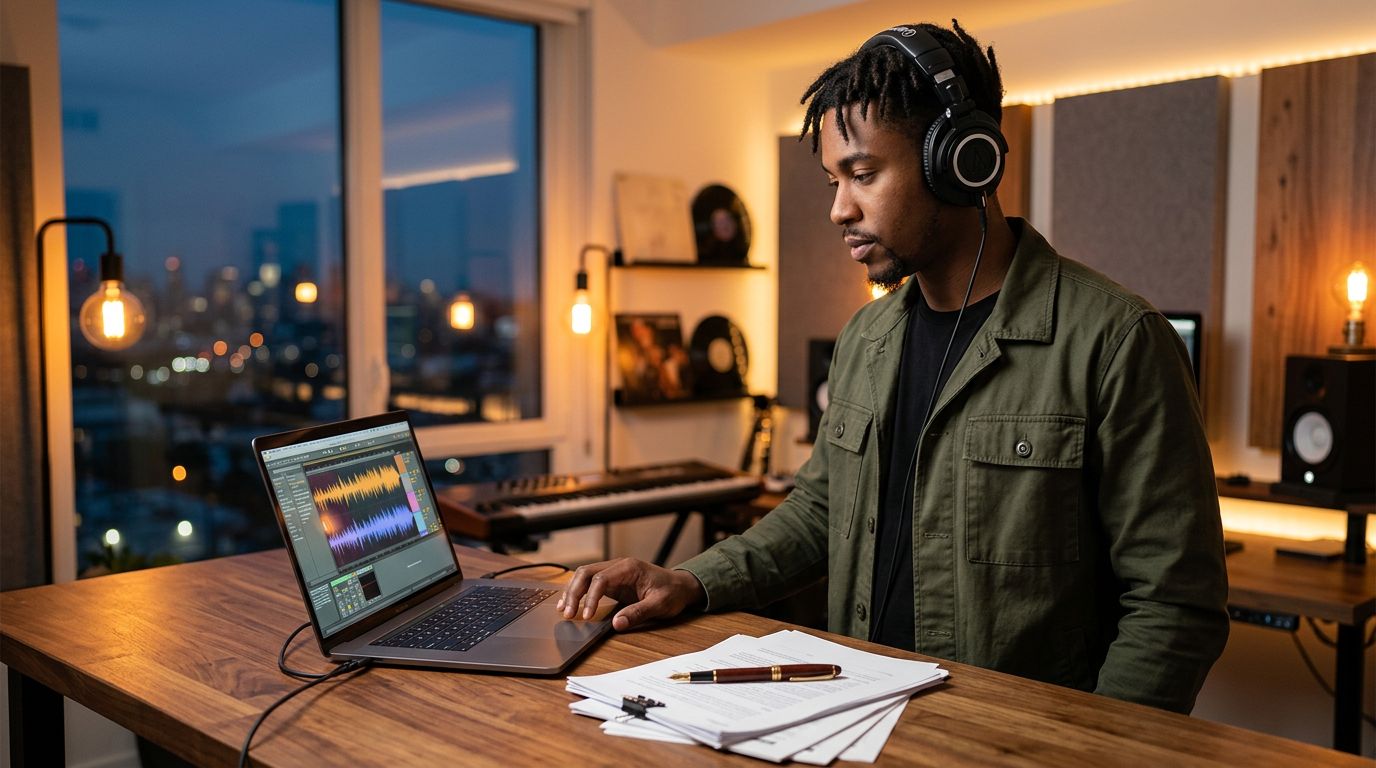
A cheap beat can turn into an expensive problem after your song starts moving. Plenty of indie rappers buy a lease in five minutes, then find out later they hit a stream cap, owe publishing they never planned for, or can’t clear a video upload.
Most beat lease agreements are not traps, but they are full of terms that matter more than the price tag. If you want your release to stay up, get paid, and avoid a fight with the producer, read the contract before you record the final take.
A lease is permission, not ownership
When you buy a beat lease, you usually are not buying the beat itself. You are buying permission to use it under certain limits.
That point gets missed all the time. A producer often keeps the copyright in the instrumental, then licenses you the right to record and release your song on top of it. In many beat lease agreements, other artists can lease the same beat too, because the deal is non-exclusive.
Under the U.S. Copyright Act, the copyright owner controls copying, distribution, public use, and derivative works. Section 106 is the backbone here. Your lease is the carveout that tells you what you may do without stepping on those rights.
If you want actual ownership of the beat, the contract has to say that clearly. A copyright transfer also needs a signed writing under 17 U.S.C. Sec. 204(a). If that language is missing, you probably did not buy the copyright, even if the sales page used big words like “full rights” or “premium license.”
This quick comparison helps sort out the labels sellers use:
| Deal type | What you get | What you usually do not get |
|---|---|---|
| Non-exclusive lease | Permission to release a song within stated limits | Sole use of the beat or ownership of the beat copyright |
| Exclusive license | Broader rights, often with no future sales to new artists | Automatic transfer of the underlying copyright |
| Assignment or sale | Copyright ownership if the contract clearly transfers it | Any rights the seller kept, such as credit or past leases |
Names matter less than the actual wording. A contract can call something “exclusive rights” and still leave the producer as the owner.
That is why the first question is simple. Are you buying a license, or are you buying ownership?
Read the license grant line by line
The license grant is the heart of the deal. It tells you what you can do, where you can do it, and when those rights end.
Start with the term. Some leases last a year. Others run until you hit a stream or sales limit. If the contract is silent, do not assume you have forever. A beat seller may say the song can stay live after the term, or may require you to renew before you can keep exploiting it.
Next, check the usage caps. Many beat lease agreements limit streams, downloads, physical sales, music videos, radio spins, or live shows. Those numbers matter most when a song starts working. A lease that looks cheap at checkout can become a bad deal if you have to upgrade right after release.
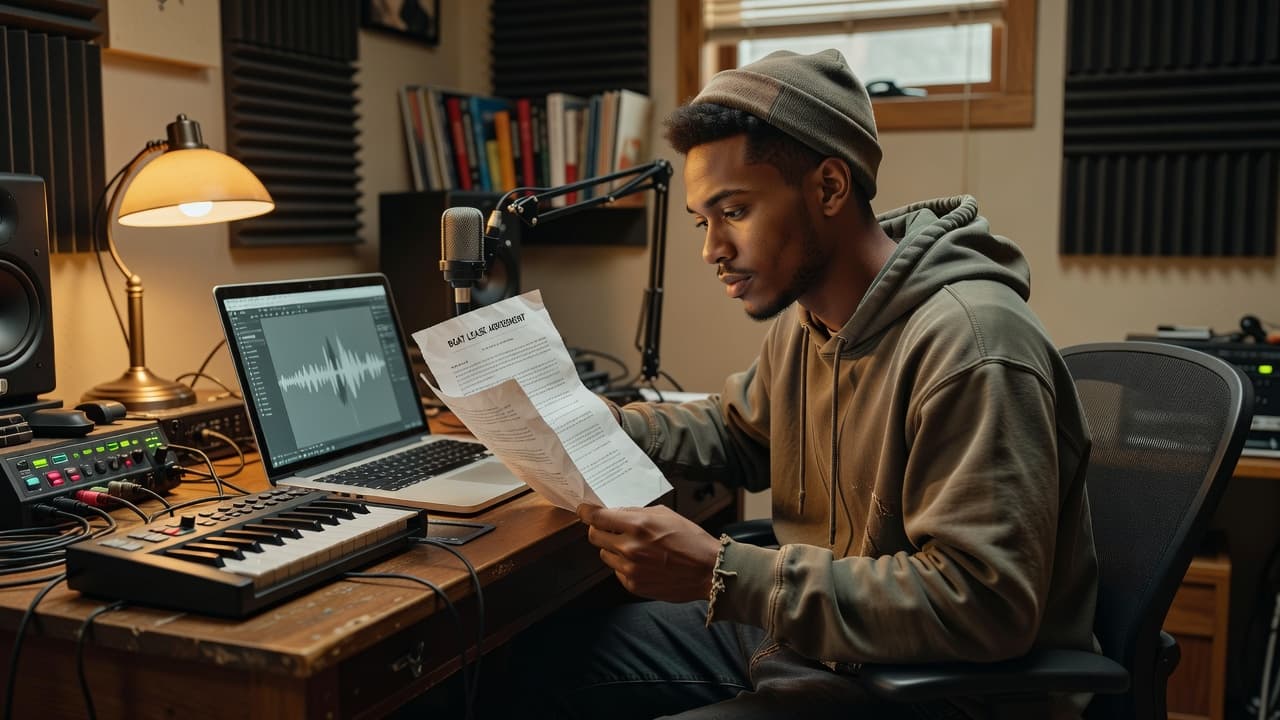
Also review the territory and media language. “Worldwide” is common, but not automatic. You also need to know if the lease covers streaming platforms, YouTube, TikTok, live performance, podcasts, film, ads, and sync placements. Some sample templates for non-exclusive licenses show how often these limits appear in the market, including platform and monetization rules in a non-exclusive license example.
Then look at Content ID and social media claims. Some producers keep the right to register the beat in YouTube’s system. That can create headaches if your own upload gets flagged. If you plan to run ads, upload lyric videos, or let a distributor monetize your catalog, the contract should say who controls those claims.
A good gut-check is this: can you tell, in plain words, how long you may use the beat, how many times, on which platforms, and what extra money you owe after success? If the answer is no, stop before you pay.
Publishing splits matter as much as the price
A lot of artists focus on the lease fee and ignore the back end. That is where many disputes start.
Beat lease agreements often split money in more than one bucket. There is the master side, which covers income tied to the sound recording. Then there is the publishing side, which covers the musical work itself, including the beat, melody, and lyrics. A producer may ask for a writer share, a publisher share, or both.
If the split language is vague, problems show up later with ASCAP, BMI, Songtrust, your distributor, or your label. You need to know who registers the song, how the ownership percentages read, and whether the producer expects part of sync income, performance royalties, or mechanical royalties.
Credit language matters too. If the lease requires “Prod. by…” in titles, descriptions, or metadata, follow it. A missing credit can become a breach. It can also sour a relationship you may want later when you need an upgrade or a favor.
Courts have also made clear that adding something to a work does not automatically make you a co-owner of every part of it. In Childress v. Taylor, a federal appeals court explained that joint authorship depends in part on intent, not just contribution. In plain English, adding lyrics to a leased beat does not mean you suddenly own the producer’s instrumental copyright.
For artists who want help sorting out splits, registrations, and royalty language before release, music rights and royalty management legal advice can save a lot of backtracking later. Money gets lost when ownership is fuzzy, and fuzzy language is common in low-cost beat deals.
Samples and warranties can sink a release
You may trust the producer. That still does not answer the sample question.
If the beat contains an uncleared sample, loop, or vocal chop, the risk can land on you after release. A distributor can pull the track. A platform can mute the audio. A rights owner can send a claim, demand money, or push for a takedown. Those fights are not theoretical. In Bridgeport Music, Inc. v. Dimension Films, the court took a hard line on digital sampling of sound recordings, and the case became famous for its warning to get a license first.
That does not mean every loop is illegal. It does mean your agreement should say whether the beat is original or whether all third-party material has been cleared.
A solid lease should also include warranties. The producer should promise that they have the right to license the beat and that doing so does not violate someone else’s rights. If those promises are missing, you are taking on more risk than you may realize.
Then read the indemnity clause. Some beat lease agreements try to make the artist pay for every claim, even when the producer created the problem. That is a bad trade. If a hidden sample triggers a demand letter, the producer should not be able to dump the full cost on you.
If the beat uses outside material, the contract should say who cleared it and who pays if a claim shows up.
Delivery terms matter too. You may need stems, trackouts, BPM details, or a clean file version for your mix engineer. If the contract only promises an MP3, that may be all you get. Small details like this decide how fast you can finish the record and whether you can fix mix issues without begging for files later.
Exclusive upgrades do not erase old leases
Many rappers lease first, then come back for the exclusive once a song gains traction. That move can work, but only if the contract deals with prior buyers.
In a lot of cases, older non-exclusive licensees keep their rights until their own terms end. That is a common point in beat market practice, and you can see it discussed in this overview of leased beats versus exclusive rights. Buying an exclusive later does not always clear the field overnight.
Because of that, an exclusive upgrade should answer three things. First, does the producer stop selling new leases right away? Second, do prior licensees stay protected, and for how long? Third, does your upgrade fee credit the money you already paid for the lease?
You should also ask for a written statement that lists prior licenses, known disputes, and any existing Content ID registrations. If another artist already uploaded the same beat and built traffic around it, your release may run into confusion, false claims, or audience fatigue.
Sometimes the best move is to ask for an option before you lease. A short exclusivity hold, a right of first refusal, or a defined upgrade path can keep you from losing the beat after your preview clips start buzzing.
The boring clauses decide where fights happen
Artists skim the last page of a contract because it feels dry. That is often where the real pain lives.
Start with governing law and venue. If the producer is in another state, or another country, the contract may require any dispute to be handled far from you. A bad forum clause can make even a small conflict too expensive to chase.
Look for attorney’s fees, notice rules, and a cure period. If you miss a credit or late report, you want a chance to fix it before the producer can yank the license. Without a cure period, a minor slip can turn into a takedown threat.
Arbitration clauses deserve the same attention. Some are fair. Others make a dispute costly or one-sided. Meanwhile, if a copyright claim turns serious, federal law can pull parts of the fight into federal court anyway, especially when ownership is at issue.
Be careful with “work made for hire” language too. In Community for Creative Non-Violence v. Reid, the U.S. Supreme Court made clear that calling someone an independent contractor does not turn them into an employee for copyright purposes. That matters because some beat deals use work-for-hire phrases loosely. If the contract tries to grab broad rights without a clean assignment, the label on the clause may not save it.
A short contract can still carry big legal weight. That is why the back half deserves the same attention as the price and the beat preview.
When a lawyer should review the deal
If the beat is central to a serious release, a contract review is money well spent. That is even more true when you are buying an exclusive, planning a video campaign, splitting revenue with collaborators, or pitching the song for brand use.
Chase Lawyers is built for this kind of problem. The firm is a boutique entertainment practice with offices in Miami and New York City, and it works with artists, producers, influencers, athletes, and creative brands. Its team focuses on protecting creative rights, simplifying hard contract issues, and helping clients build careers across music, film, television, and digital media.
If you need help before checkout or before release day, Chase Lawyers can review beat lease agreements, fix split language, push back on bad indemnity terms, and tighten ownership wording. Their work in artist and producer contract protection is a strong fit when a producer deal feels unclear or one-sided.
A few red flags should send you for review right away:
- The lease does not say how long the rights last or what happens after success.
- Sample warranties are missing, or the indemnity clause dumps all claims on you.
- Ownership and royalty terms conflict with each other.
- The producer can revoke the license fast, with no notice or chance to cure.
- You are about to spend real money on marketing, videos, or playlist pitching.
A contract should make your release safer, not shakier. If the paper leaves you guessing, get it cleaned up before the song goes live.
Conclusion
The biggest mistake with beat lease agreements is treating them like a receipt. They are not a receipt. They are the rulebook for your song’s life after release.
Read the rights, the limits, the splits, and the sample language before you pay. If anything stays muddy, get legal review before the beat becomes the center of your rollout.
A lease can be a smart move for an indie rapper. It only works that way when the contract matches your plan.