


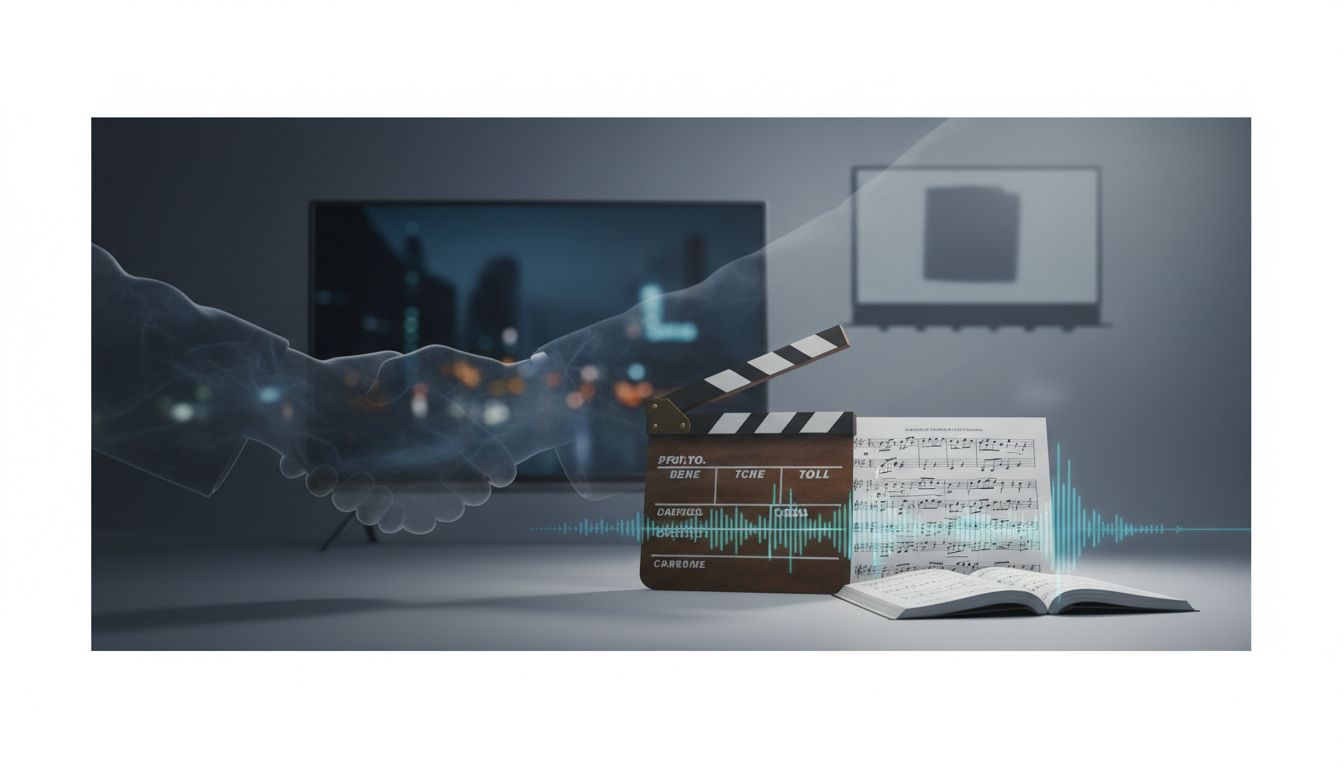
What a Good Sync License Looks Like, key terms for film, TV, and ads
A sync offer can feel like a golden ticket. Your track lands in a series trailer, a brand spot, or an indie film scene, and suddenly your music is attached to a story people actually watch. But the paperwork decides whether that placement pays fairly, stays clean, and doesn’t cause problems later.
A good sync license is clear, limited to what the project needs, and written so both sides know the rules. It also matches real-world music clearance, meaning it accounts for who owns what and how the music will be used.
Below is a practical breakdown of the sync license terms that matter most for film, TV, and advertising, written for artists, publishers, producers, and newer music supervisors who want fewer surprises.
Table of Contents
ToggleBefore you negotiate, confirm what you’re licensing (two rights, not one)
Most sync deals require clearing two separate copyrights: the musical composition (songwriting and publishing) and the sound recording (the master). If a production wants to use the actual released recording, you usually need a sync license for the composition and a master use license from whoever controls the master.
If you’re a fully independent artist, you might control both. If you have a label, distributor deal, producer agreement, co-writers, or a publisher, you might not. That’s why “Can you grant these rights?” is often the first real question a supervisor asks.
A good sync license starts with chain of title basics:
- Who owns the publishing (and in what splits)?
- Who owns the master (and are there approvals)?
- Are there samples, interpolations, or beat leases involved?
- Are there featured artists who must consent?
When the ownership picture is fuzzy, productions may pass, even if they love the song. If you need a refresher on why this gets complicated fast, see Chase Lawyers’ overview of how two copyrights affect music licensing.
For newer supervisors and content creators, it also helps to know the common license types surrounding sync, including master, performance, and mechanical rights. This explainer from Musicians Institute gives a clean overview of music licensing agreements for film and television.
When the rights are confirmed up front, the contract becomes a business decision, not a guessing game.
The core sync license terms that decide value (and what “use” really means)
The heart of any deal is the scope. A “good” agreement doesn’t just say the producer can sync your song, it spells out how far that permission goes. These sync license terms are the ones that usually move the money and the risk.
Here’s what should be specific, not vague:
| Term | What it controls | Why it matters |
|---|---|---|
| Use and context | Background, featured, theme, trailer, promo | A featured use is often priced higher than background |
| Media | TV, theatrical, streaming, online, social, paid ads | “All media” can be fine, but it should be priced accordingly |
| Term | 3 months, 1 year, 5 years, in perpetuity | Shorter terms give you a chance to re-license later |
| Territory | US, North America, worldwide | Ads often push for worldwide, even if the buy is limited |
| Exclusivity | Exclusive, non-exclusive, category-exclusive | Exclusivity can block other income, price it like it matters |
| Fee and payment timing | Flat fee, installment, invoice net 30 | A great fee is useless if payment terms are sloppy |
For advertising, watch for category exclusivity (for example, no other beverage ads for 12 months). That can be reasonable, but only if the category is narrow, the time period is short, and the fee reflects what you’re giving up.
For film and TV, pay attention to promo rights. A show might want the right to use the scene in trailers, “previously on” recaps, or social clips. That’s normal, but you want it clearly included (or clearly excluded) so there’s no later argument about whether a trailer is a new use.
If you want a plain-English list of licensing language you’ll see often, Bopper Music’s breakdown of key terms in a music license is a helpful quick reference.
Clauses that protect you after release (approvals, credits, and who pays if things go wrong)
A sync deal doesn’t end when the episode airs or the ad launches. The “after” clauses are where people get burned, especially when an agreement is copied from an old template.
Start with approvals and edits. Can they edit the track, loop it, change the tempo, or add voiceover on top? Most productions want practical flexibility, but you can still set guardrails. A common middle ground is allowing editing for length while prohibiting changes that distort the meaning, add new lyrics, or imply an endorsement.
Then look at the legal risk clauses:
- Warranties: You’re promising you own or control what you’re licensing, and that it doesn’t infringe.
- Indemnity: If that promise isn’t true, who pays the legal bill?
- Limitation of liability: A cap can keep a small mistake from becoming a career-ending loss.
If you’re one of multiple writers, the contract might include MFN (most favored nations). In simple terms, it means co-rightsholders get comparable terms. MFN can reduce arguments between writers and publishers, but it can also limit your ability to negotiate a higher fee for your share. It should match how your splits actually work.
Now, the money that keeps coming: performance royalties. For film and TV, a cue sheet helps PROs pay writers and publishers when music is broadcast. Ads are trickier, but documentation still matters. Chase Lawyers’ guide to how synchronization royalties work in TV and film explains how sync connects to the broader royalty picture.
Finally, newer deals sometimes include language about training AI models, using stems for future content, or re-using the track in unrelated campaigns. If the buyer wants those rights, they should ask clearly, and pay clearly.
When the contract feels one-sided or confusing, that’s the moment to slow down.
Getting it signed without giving away the song
A good sync license is like a well-built studio session. Everything is labeled, nothing is missing, and nobody’s guessing which version is final.
Chase Lawyers helps musicians, publishers, producers, and creative brands turn confusing terms into practical choices. As a boutique entertainment law firm with offices in Miami and New York City, the team focuses on protecting creative talent, intellectual property, and big ideas, while keeping deals workable for real-world production schedules. If you need support clearing rights, negotiating sync license terms, or tightening language before you sign, start with their legal support for movie and TV music licensing.
The best sync opportunities don’t just pay once, they build momentum. Protect the track now so you can say “yes” faster next time, with confidence.


- 21 SE 1st Ave, Suite 700, Miami, FL 33131
- 305-373-7665
- 305-373-7668
- info@chaselawyers.com
- 1345 Avenue of the Americas, 2nd Floor, New York, NY 10105
- 212-601-2762
- info@chaselawyers.com
Get a response within 24 hours. We’ll clearly explain how we can support and protect your brand while staying within your budget.